welcome
-
linshizi@fortismate.com ; sales@fortismate.com



APP vs SBS Membrane: Differences, Applications & Selection Guide | FortisMate
APP vs SBS Membrane: What Is the Difference and Which Waterproofing Membrane Should You Choose?
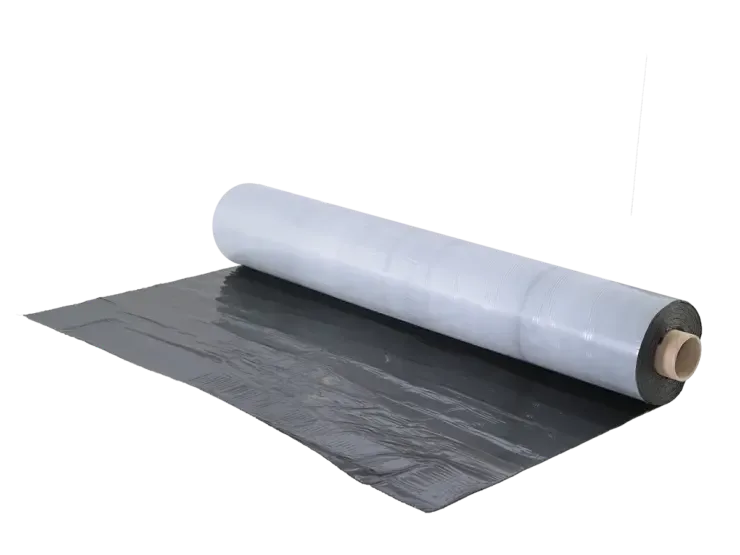
When selecting a modified bitumen waterproofing membrane, two of the most widely used options are APP modified bitumen membranes and SBS modified bitumen membranes.
Although both are polymer-modified bitumen membranes designed to provide durable waterproofing protection, they have significant differences in polymer structure, temperature resistance, flexibility, elasticity, and application performance.
Understanding the difference between APP vs SBS membrane is important when choosing a waterproofing system for roofs, terraces, foundations, basements, bridges, tunnels, and other demanding construction projects.
In this guide, FortisMate explains the key differences between APP and SBS modified bitumen membranes, their advantages and limitations, and how to select the right membrane for different waterproofing applications.
What Is the Difference Between APP and SBS Membranes?
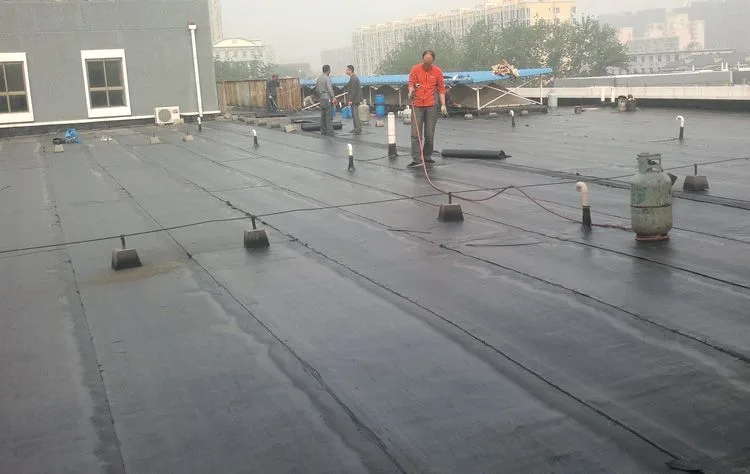
The primary difference between APP and SBS membranes is the type of polymer used to modify the bitumen.
APP (Atactic Polypropylene) is a plastomeric polymer. When added to bitumen, it improves the membrane’s resistance to high temperatures, UV exposure, and deformation. APP modified bitumen membranes are therefore commonly used in roofing and other applications exposed to strong sunlight and elevated surface temperatures.
SBS (Styrene-Butadiene-Styrene) is an elastomeric polymer. It gives bitumen greater flexibility, elasticity, and resistance to low temperatures. SBS modified membranes can accommodate greater substrate movement and are particularly suitable for cold climates, foundations, basements, and applications where flexibility is important.
In simple terms:
APP is generally selected for higher-temperature and UV-exposed applications, while SBS is preferred when flexibility, elongation, and low-temperature performance are critical.
However, the actual performance of a membrane also depends on its formulation, polymer content, reinforcement, thickness, surface treatment, and installation method.
APP vs SBS Membrane: Key Differences
| Property | APP Modified Bitumen Membrane | SBS Modified Bitumen Membrane |
|---|---|---|
| Polymer Type | Plastomeric | Elastomeric |
| Main Polymer | Atactic Polypropylene (APP) | Styrene-Butadiene-Styrene (SBS) |
| High-Temperature Performance | Excellent | Very Good |
| Low-Temperature Flexibility | Good | Excellent |
| Elasticity | Lower | Higher |
| Elongation | Moderate | High |
| Shape Stability | Excellent at elevated temperatures | Excellent with greater flexibility |
| UV Resistance | Generally very good | Depends strongly on surface protection |
| Resistance to Structural Movement | Moderate | Excellent |
| Typical Installation | Torch-applied, depending on system | Torch-applied, self-adhesive or other system-specific methods |
| Typical Applications | Roofs, terraces, exposed areas | Foundations, basements, cold climates, movement-prone structures |
The values above are general characteristics. Actual membrane performance should always be verified against the manufacturer’s technical data sheet and the requirements of the specific project.
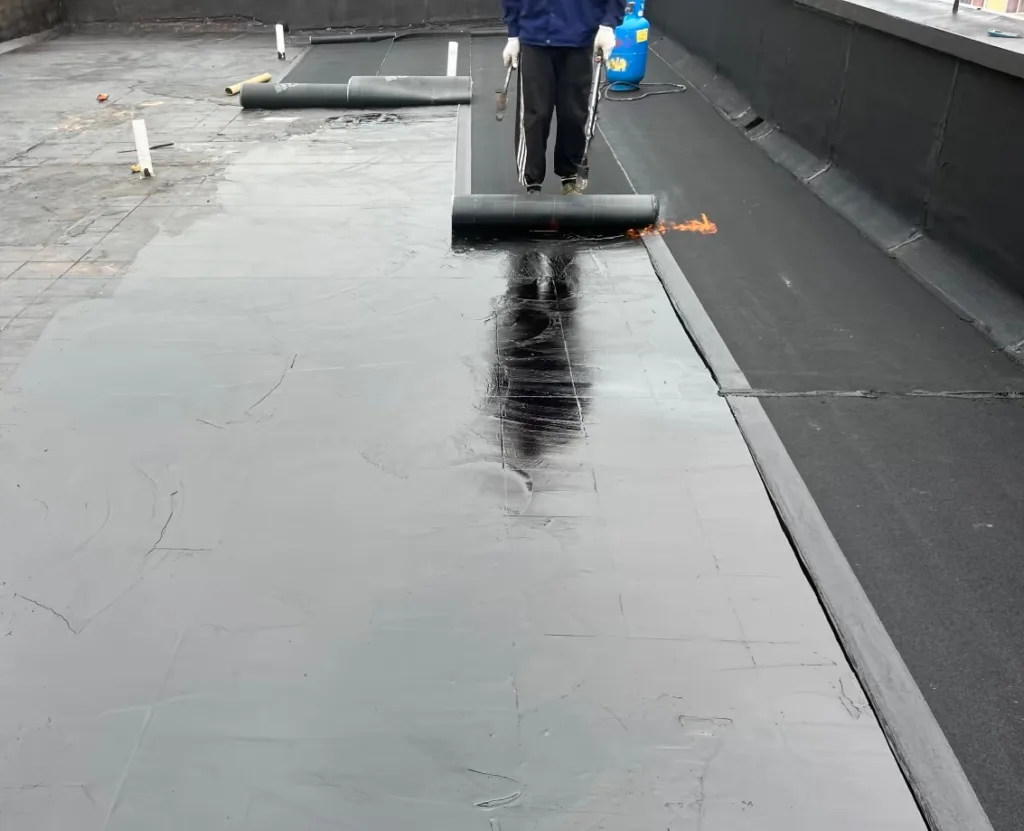
APP Modified Bitumen Membrane
APP modified bitumen membrane is produced by modifying bitumen with Atactic Polypropylene. The resulting material has a more plastomeric behavior compared with SBS-modified bitumen.
One of its major advantages is its ability to maintain dimensional stability under high temperatures.
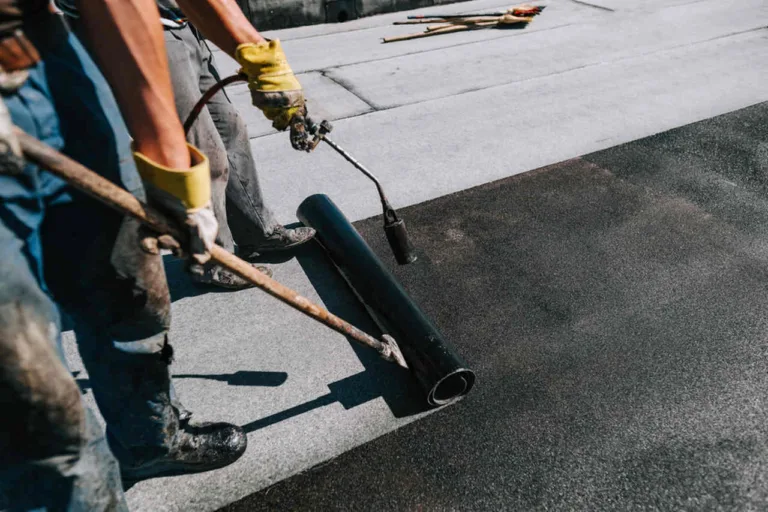
This makes APP membranes particularly suitable for waterproofing systems exposed to:
- Strong solar radiation
- High roof surface temperatures
- Hot and dry climates
- Rooftops and terraces
- Areas where resistance to heat-induced deformation is important
Advantages of APP Waterproofing Membranes
APP modified membranes can provide several important benefits:
1. Excellent High-Temperature Resistance
APP modification improves the membrane’s resistance to softening and deformation at elevated temperatures. This is particularly important for exposed roofs and terraces.
2. Good Resistance to UV Exposure
APP membranes are commonly used in roofing systems because of their good resistance to weathering and solar exposure, particularly when the membrane incorporates an appropriate mineral or protective surface.
3. Good Dimensional Stability
The plastomeric characteristics of APP help the membrane maintain its shape under demanding temperature conditions.
4. Suitable for Hot Climates
APP membranes are often considered for projects in regions where summer temperatures and solar radiation are significant.
Typical APP Membrane Applications
APP modified bitumen membranes are commonly used for:
- Flat roofs
- Sloped roofs
- Terraces
- Rooftop waterproofing
- Balconies
- Podium decks
- Exposed waterproofing systems
- Hot-climate roofing applications
SBS Modified Bitumen Membrane
SBS modified bitumen membrane uses Styrene-Butadiene-Styrene as the principal polymer modifier.
Unlike APP, SBS gives bitumen an elastomeric character. This allows the membrane to stretch and recover more effectively and remain flexible at low temperatures.
For this reason, SBS membranes are often selected for applications where the waterproofing layer may experience:
- Structural movement
- Settlement
- Thermal expansion and contraction
- Substrate cracking
- Low temperatures
- Dynamic movement
Advantages of SBS Waterproofing Membranes
1. Excellent Flexibility
SBS modification significantly improves the flexibility of bitumen membranes, allowing them to accommodate substrate movement more effectively.
2. Superior Low-Temperature Performance
SBS membranes generally provide better cold flexibility than conventional bitumen membranes and many APP formulations.
Depending on the formulation and product grade, cold-flexibility performance can reach approximately -20°C or lower.
3. High Elongation
The elastomeric structure of SBS allows the membrane to withstand greater deformation without losing its waterproofing function.
4. Excellent Crack-Bridging Capability
SBS modified membranes are particularly useful where minor substrate cracking or movement may occur.
Typical SBS Membrane Applications
SBS modified bitumen membranes are commonly used for:
- Foundation waterproofing
- Basement waterproofing
- Underground structures
- Retaining walls
- Cold-climate buildings
- Water tanks
- Swimming pools
- Parking structures
- Movement-prone substrates
- Complex waterproofing details
APP vs SBS: Which One Is Better?
There is no universal answer to whether APP or SBS is better.
The correct choice depends on the climate, substrate, structural movement, application area, installation conditions, and required performance.
Instead of asking which membrane is better, it is more useful to ask:
Which modified bitumen membrane is better suited to this particular project?
APP Is Often Preferred When:
- The membrane will be exposed to high temperatures.
- The roof receives intense solar radiation.
- High-temperature dimensional stability is important.
- The project is located in a hot or warm climate.
- The application is primarily roof or terrace waterproofing.
SBS Is Often Preferred When:
- The project is located in a cold climate.
- The substrate may experience movement.
- High flexibility and elongation are required.
- The membrane is used for foundations or basements.
- Crack-bridging performance is important.
- The waterproofing system needs to accommodate thermal or structural movement.
APP vs SBS Membrane for Roof Waterproofing
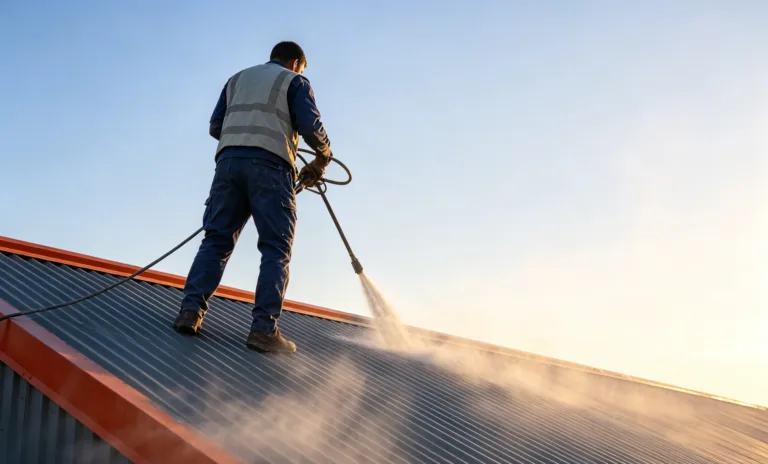
Roof waterproofing is one of the most common applications for modified bitumen membranes.
For exposed roofs in hot climates, APP modified bitumen membranes can be an excellent option because of their high-temperature performance and resistance to deformation.
However, SBS membranes can also be used successfully in roofing systems, particularly when flexibility and low-temperature performance are more important.
The final selection should consider not only the polymer type but also:
- Membrane thickness
- Reinforcement type
- Surface finish
- UV exposure
- Roof slope
- Drainage conditions
- Local climate
- Installation method
- Expected service conditions
For long-term exposed roofing, a suitable mineral-surfaced membrane or another protective finish may also be required depending on the system design.
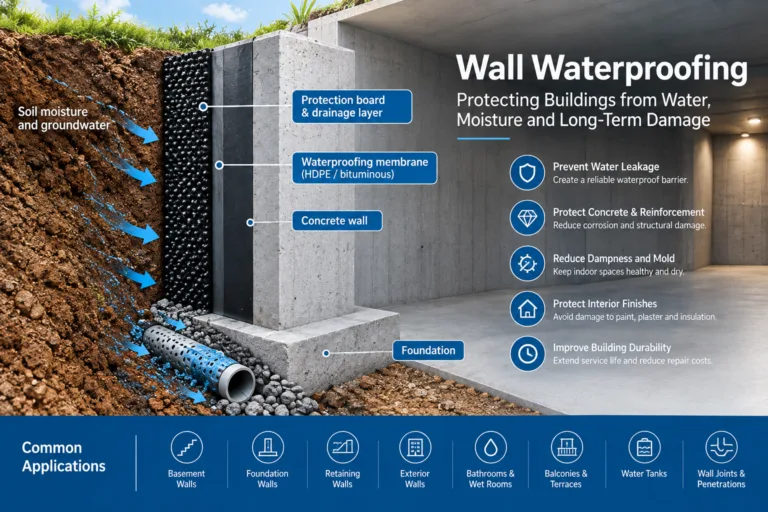
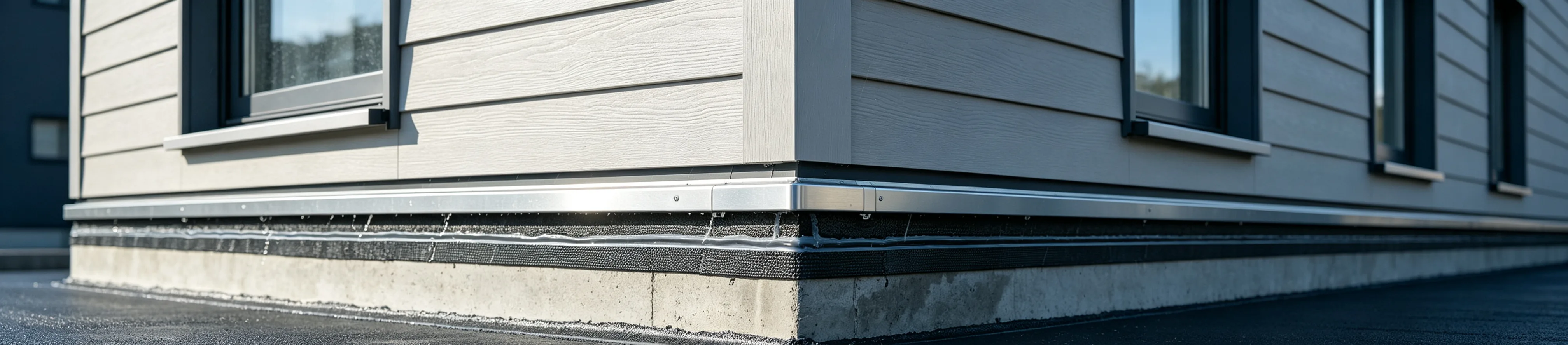
APP vs SBS Membrane for Foundation and Basement Waterproofing
Foundation and basement waterproofing presents different challenges from exposed roofing.
Underground structures can experience:
- Soil movement
- Settlement
- Concrete shrinkage
- Cracking
- Hydrostatic pressure
- Temperature variation
- Mechanical stress during backfilling
Because flexibility and crack-bridging capability are particularly important in these conditions, SBS modified bitumen membranes are often a suitable choice for foundation and basement waterproofing.
However, project conditions vary. In addition to polymer type, the waterproofing designer should consider the reinforcement, membrane thickness, substrate condition, protection layer, drainage system, and expected water pressure.
APP vs SBS for Cold Climates
Low-temperature flexibility is one of the most important differences between APP and SBS membranes.
When temperatures fall, conventional bitumen can become harder and less flexible.
SBS modification improves the elastomeric properties of the bitumen and allows the membrane to maintain greater flexibility at low temperatures.
This makes SBS particularly attractive for:
- Northern climates
- Continental climates
- Cold-weather construction
- Foundations and basements
- Roofs exposed to large temperature fluctuations
The actual cold-bending or flexibility temperature should always be checked on the product’s technical data sheet because performance varies between formulations.
APP vs SBS for Hot Climates
In hot climates, waterproofing membranes can be exposed to high surface temperatures, especially on dark-colored roofs under direct sunlight.
APP modified membranes are widely used in these conditions because their plastomeric modification provides good resistance to high-temperature softening and deformation.
They can be considered for:
- Exposed roofs
- Industrial buildings
- Warehouses
- Terraces
- Rooftops
- Podiums
- Hot and sunny regions
Again, the polymer type is only one part of the overall system. Surface protection, membrane thickness, reinforcement, installation quality, and roof design also influence long-term performance.
Does Reinforcement Matter in APP and SBS Membranes?
Yes.
The performance of a modified bitumen membrane is determined by more than APP or SBS polymer modification.
The reinforcement layer also plays an important role in dimensional stability, tensile strength, elongation, and resistance to mechanical stress.
Common reinforcement materials include:
Polyester Reinforcement
Polyester reinforcement provides high tensile strength and good elongation.
It is widely used in membranes designed for applications where movement and mechanical performance are important.
Fiberglass Reinforcement
Fiberglass provides good dimensional stability and resistance to deformation.
It is commonly used where dimensional stability is a priority.
Composite Reinforcement
Some membranes use composite reinforcement to combine the advantages of different reinforcement materials.
Therefore, when comparing two membranes, it is important to compare the complete membrane construction, rather than looking only at whether the product is APP or SBS modified.
How to Choose the Right Modified Bitumen Membrane
When selecting an APP or SBS waterproofing membrane, consider the following factors.
1. Climate
For hot, sunny climates, APP membranes may provide advantages in high-temperature resistance.
For very cold climates, SBS membranes are often preferred because of their superior low-temperature flexibility.
2. Structural Movement
If the substrate is expected to experience settlement, expansion, contraction, or other movement, a highly flexible SBS membrane may be more appropriate.
3. Application Area
Roofing, terraces, foundations, basements, bridges, and underground structures can have very different waterproofing requirements.
The membrane should therefore be selected according to the actual application.
4. Reinforcement
Consider tensile strength, elongation, dimensional stability, and resistance to mechanical damage when selecting the reinforcement type.
5. Installation Method
Torch-applied, self-adhesive, mechanically fixed, and other systems have different installation requirements.
Where open flame is restricted, a self-adhesive or other flame-free waterproofing system may be more appropriate.
6. Surface Protection
For exposed waterproofing, UV and weather protection should be considered as part of the overall system design.
7. Project Standards
Always verify the membrane’s technical specifications and compliance with the standards required by the project or local regulations.
APP vs SBS Membrane: A Quick Selection Guide
| Project Condition | Recommended Option |
|---|---|
| Hot climate | APP |
| Strong solar exposure | APP with suitable surface protection |
| Very cold climate | SBS |
| Foundation waterproofing | SBS |
| Basement waterproofing | SBS |
| Significant substrate movement | SBS |
| Standard roof waterproofing | APP or SBS, depending on conditions |
| Exposed terrace | APP or suitable SBS system |
| Crack-bridging requirement | SBS |
| Flame-free installation required | Self-adhesive system |
This table is a general selection guide rather than a substitute for project-specific waterproofing design.
FortisMate Modified Bitumen Waterproofing Membranes
At FortisMate, we understand that different construction environments require different waterproofing solutions.
Our modified bitumen membrane solutions are designed for a wide range of building and infrastructure applications, with product configurations available for different climate conditions, substrates, reinforcement requirements, and installation methods.
Depending on the project, FortisMate can provide solutions based on:
- APP modified bitumen
- SBS modified bitumen
- Polyester reinforcement
- Fiberglass reinforcement
- Self-adhesive waterproofing technology
- Different membrane thicknesses
- Different surface finishes
- Customized product specifications
For international projects, we can also support OEM and customized waterproofing membrane solutions according to project and market requirements.
APP or SBS: The Right Choice Depends on the Project
The difference between APP and SBS membranes is mainly related to their polymer modification.
APP modified bitumen membranes are generally associated with high-temperature resistance, dimensional stability, and applications exposed to strong sunlight.
SBS modified bitumen membranes provide greater elasticity, flexibility, elongation, and low-temperature performance, making them particularly suitable for cold climates and structures subject to movement.
However, choosing a waterproofing membrane should never be based on polymer type alone.
Membrane thickness, reinforcement, polymer content, surface treatment, installation method, substrate conditions, climate, and project requirements should all be evaluated together.
At FortisMate, we provide modified bitumen waterproofing solutions for roofing, foundation, basement, underground, infrastructure, and other demanding applications.
Looking for the right APP or SBS waterproofing membrane for your project? Contact FortisMate to discuss your application, technical requirements, and customized waterproofing solution.