welcome
-
linshizi@fortismate.com ; sales@fortismate.com



Learn & News
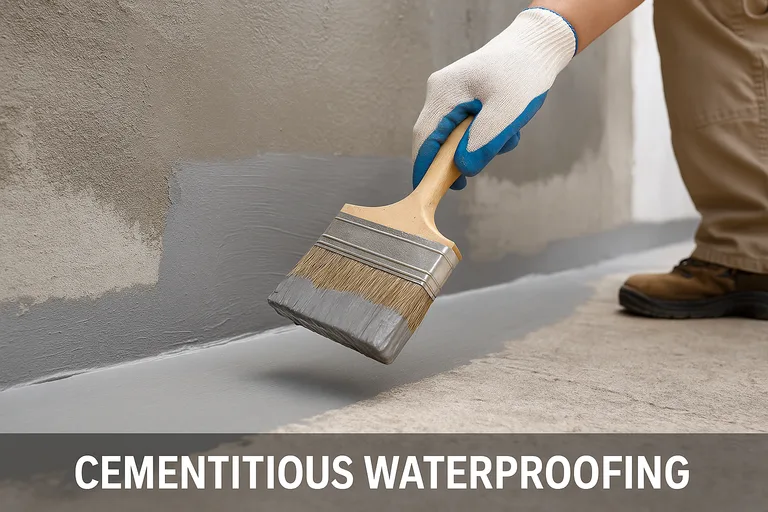
Concrete Waterproofing: Methods, Applications, and How to Choose the Right Solution
Explore concrete waterproofing methods, including membranes, cementitious coatings, and polyurethane injection grouts. Learn how to choose the right solution for foundations, basements, roofs, and other construction projects with FortisMate.

FortisMate Invited to Attend China-UAE Trade and Investment Seminar
FortisMate was invited to participate in the China-UAE Trade and Investment Seminar held on October 19, 2026, focusing on investment opportunities and business cooperation between China and the United Arab Emirates, particularly…
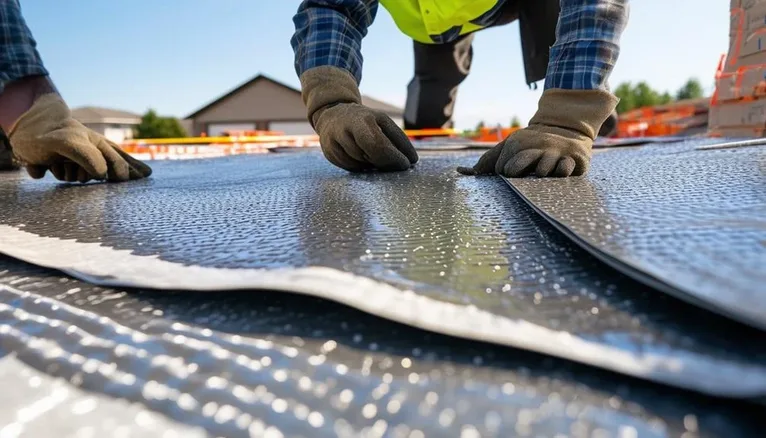
Waterproofing Membrane Installation Guide for Foundations, Basements, and Roofs
Waterproofing membrane installation is essential for protecting buildings against water infiltration, moisture damage, and premature deterioration. Whether applied to foundations, basements, or roofs, a properly designed and installed waterproofing system helps maintain…
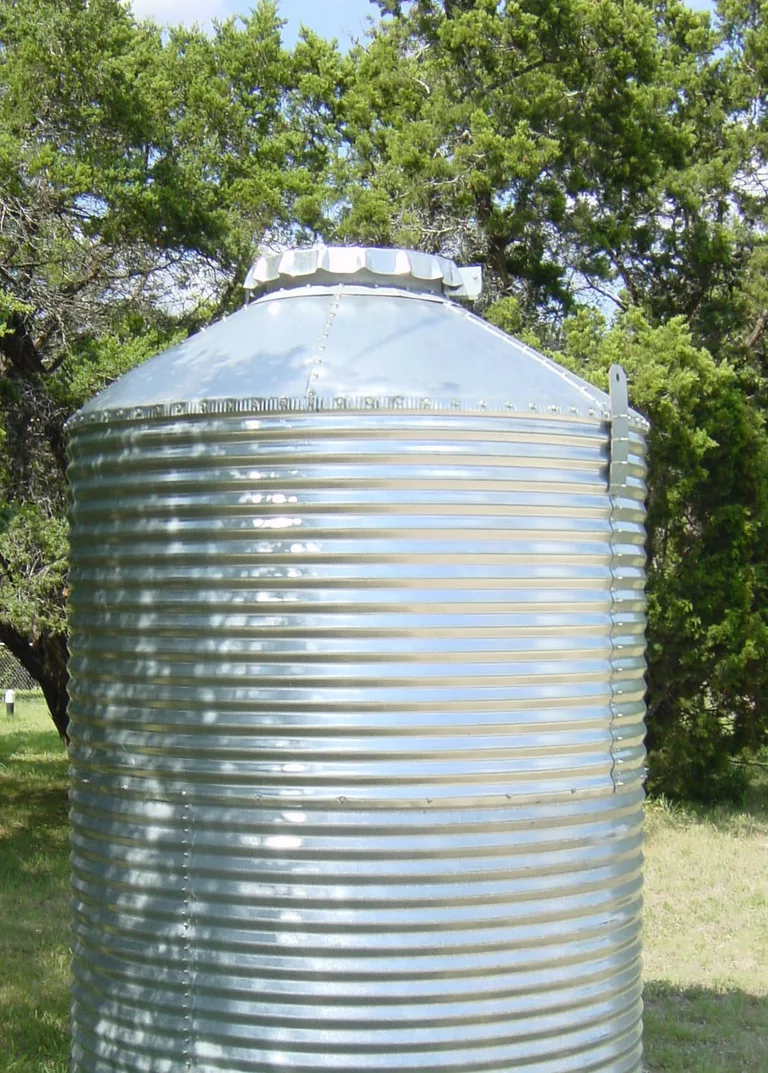
Water Tank Waterproofing: Key Considerations & Fortismate Solution Guide
Water tanks and concrete reservoirs are designed to store and protect water for long periods. However, without a properly designed water tank waterproofing system, concrete cracking, groundwater pressure, chemical exposure and temperature…
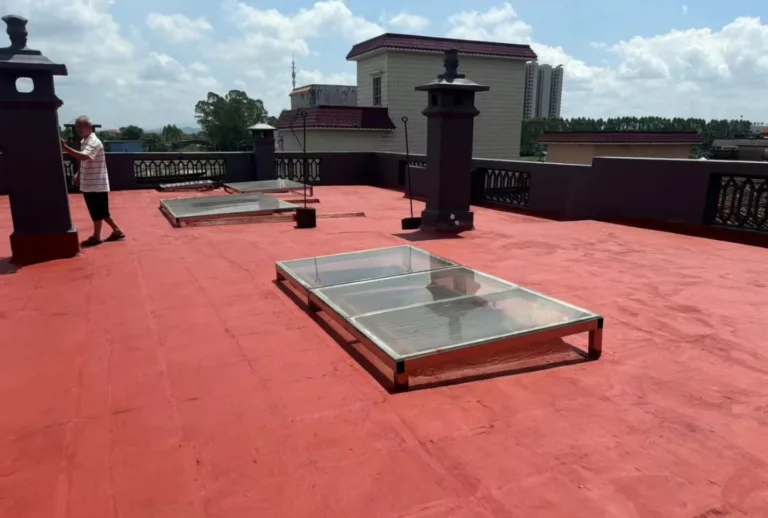
Roof Waterproofing: Types, Materials and Application Guide
Roofs are among the largest parts of a building exposed directly to rain, snow, sunlight, and changing weather conditions. Effective roof waterproofing acts as a protective barrier, preventing water from penetrating the…
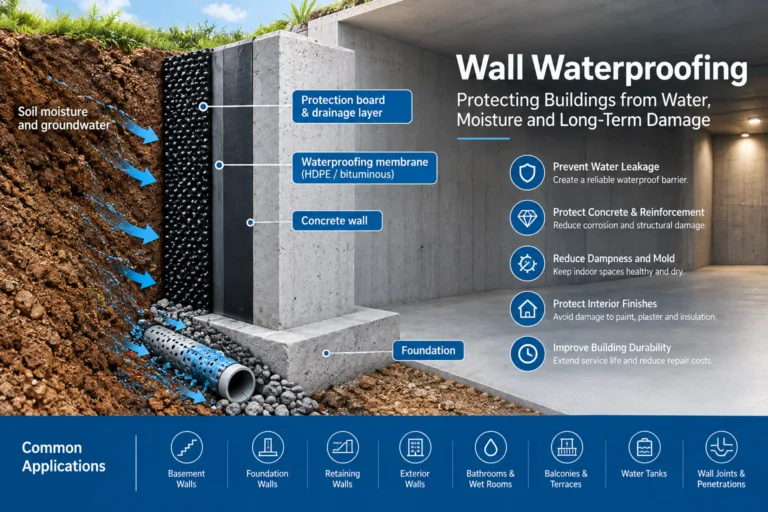
Wall Waterproofing: Types, Methods, Materials and Applications
Wall waterproofing is an important part of protecting buildings from water infiltration, moisture damage, and long-term deterioration. Walls may be exposed to rainwater, groundwater, soil moisture, water pressure, plumbing leaks, or humidity…
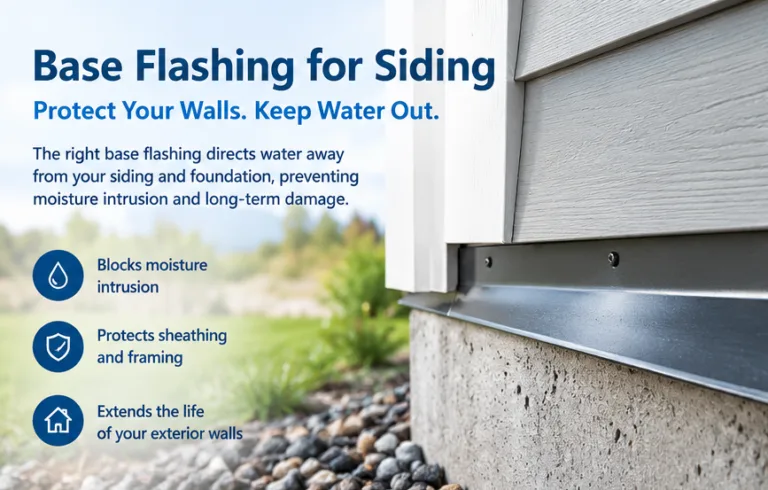
Base Flashing for Siding: Materials, Installation & Waterproofing Guide
The bottom edge of a siding system is one of the most vulnerable areas of an exterior wall. Rainwater, runoff, and splash-back can repeatedly expose this area to moisture, especially where siding…
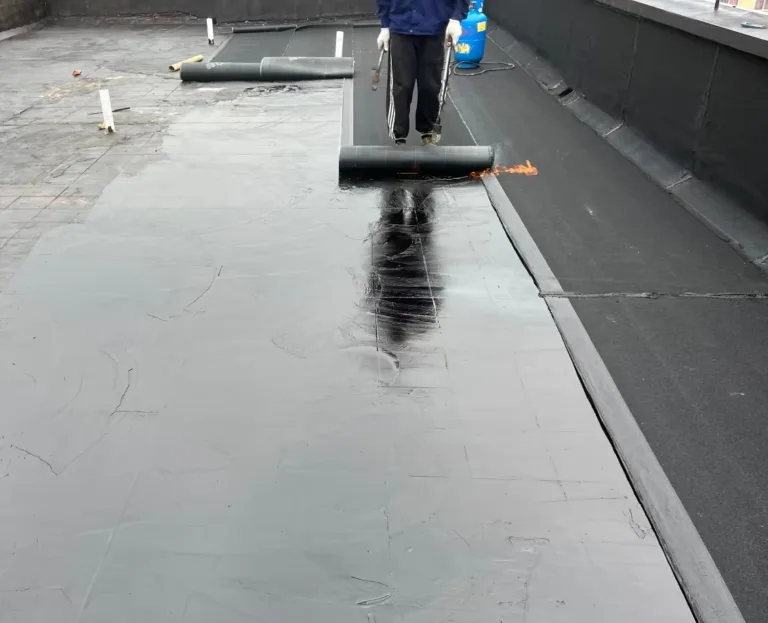
APP vs SBS Membrane: Differences, Applications & Selection Guide | FortisMate
APP vs SBS Membrane: What Is the Difference and Which Waterproofing Membrane Should You Choose? When selecting a modified bitumen waterproofing membrane, two of the most widely used options are APP modified…
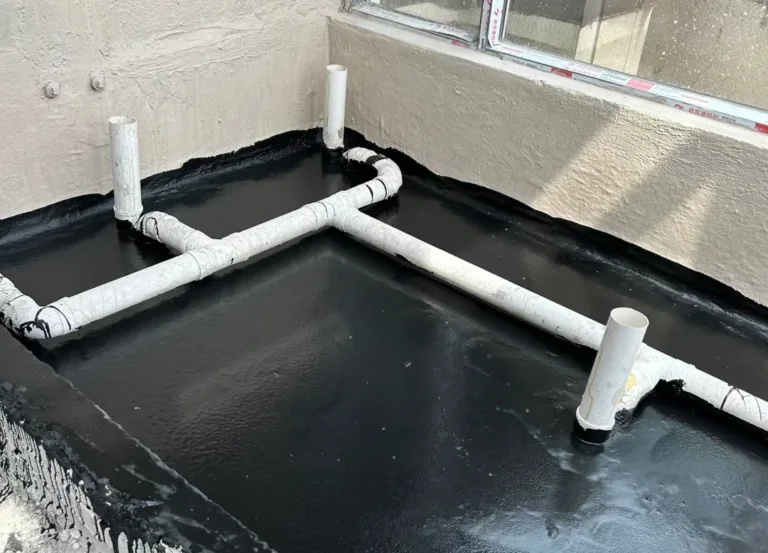
Bathroom Waterproofing: Complete Guide to Waterproofing Bathroom Floors and Walls
Bathrooms are among the most frequently used wet areas in residential and commercial buildings. Constant exposure to water, humidity, and moisture can gradually cause problems such as water leakage, mold growth, damaged…
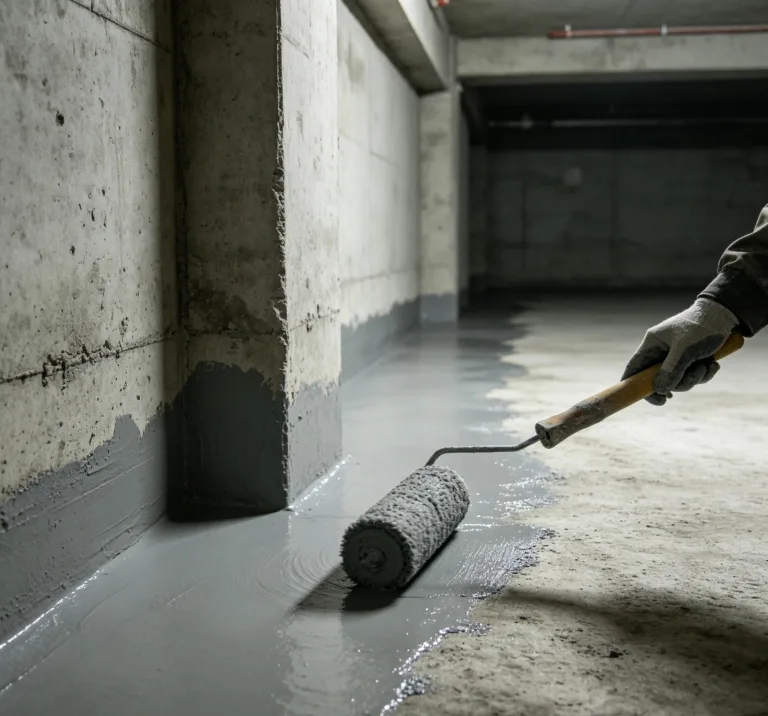
Cementitious Waterproofing: Types, Advantages, Limitations and Alternatives
Learn about cementitious waterproofing, its main types, advantages and limitations, and discover how flexible waterproofing systems can provide alternative solutions for demanding construction projects.
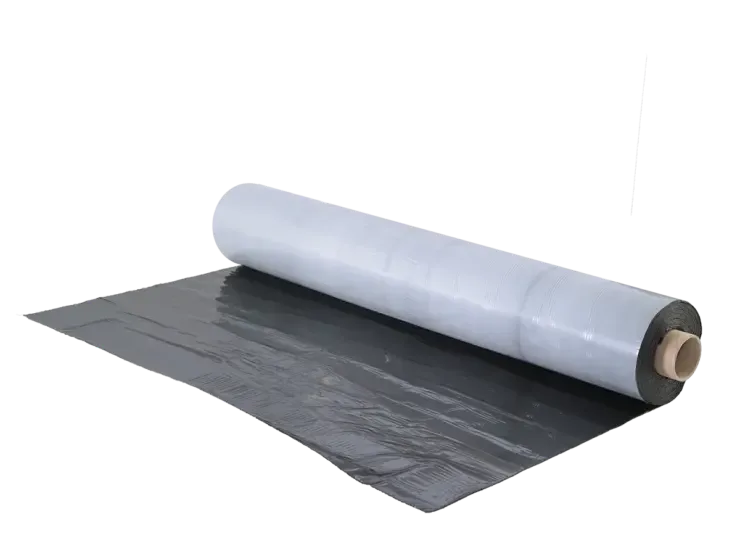
Waterproofing Membranes: Applications, Types, and FortisMate® Solutions
Water intrusion can have a significant impact on the durability, performance, and long-term value of a building. Rain, snow, surface runoff, groundwater, and hydrostatic pressure can all create pathways for moisture to…
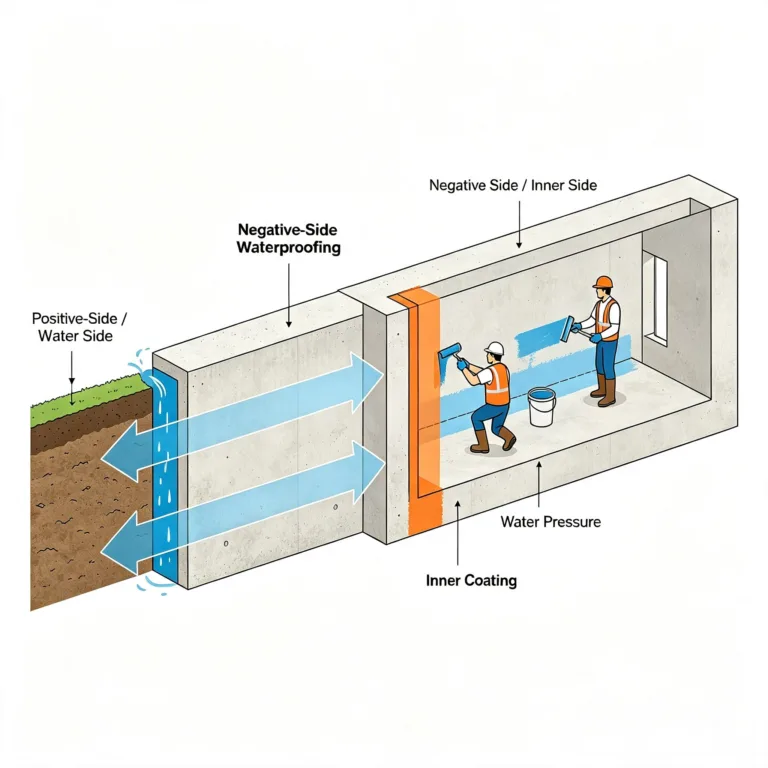
Negative-Side Waterproofing: A Complete Guide
What Is Negative-Side Waterproofing? In waterproofing, the terms “positive” and “negative” are defined by the relationship between the direction of water flow and the construction surface. Positive-side waterproofing refers to waterproofing applied…