welcome
-
linshizi@fortismate.com ; sales@fortismate.com



Negative-Side Waterproofing: A Complete Guide
What Is Negative-Side Waterproofing?
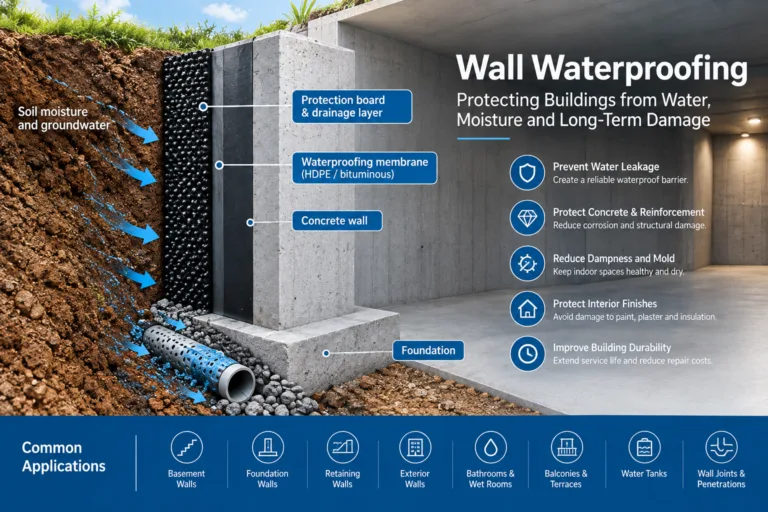
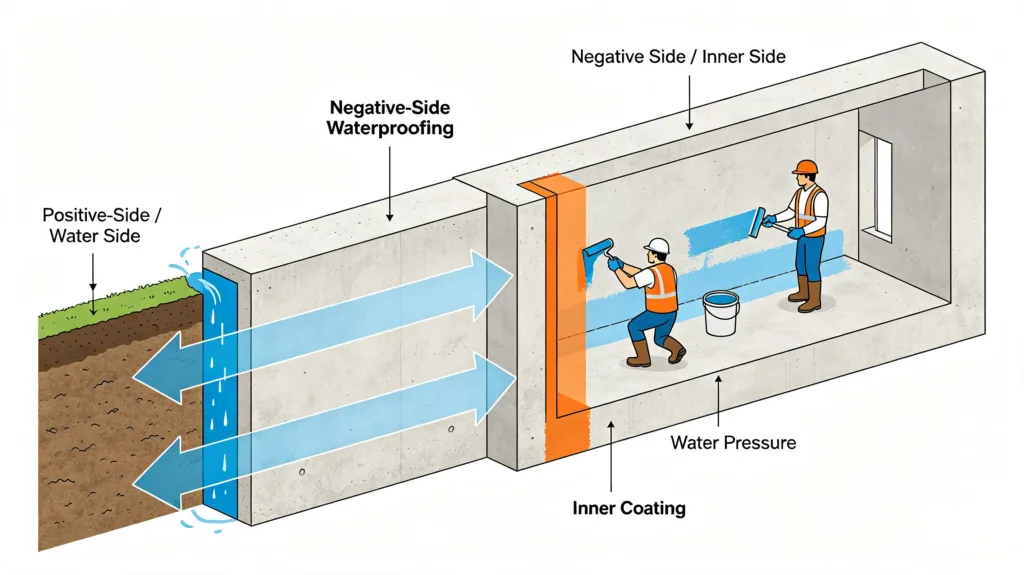
In waterproofing, the terms “positive” and “negative” are defined by the relationship between the direction of water flow and the construction surface. Positive-side waterproofing refers to waterproofing applied directly on the surface exposed to water pressure—the side that water first contacts. In contrast, negative-side waterproofing is carried out on the opposite surface, which is not directly subjected to water pressure.
Negative-side waterproofing is a widely adopted construction waterproofing technique. Instead of being laid on the water-facing exterior of structural components, it is applied to the reverse inner face. Its core purpose is to block moisture from migrating through concrete structures into indoor areas, reduce water seepage risks, and prevent water-induced structural deterioration.
This method is commonly used for permanently damp, pressurized underground indoor spaces, including basements, foundation retaining walls, elevator pits, and underground parking garages. Crystalline waterproofing materials are a prime choice for such interior remedial construction, especially when the outer structural surface is inaccessible for exterior waterproofing work.
As FortisMate, a professional manufacturer specializing in construction chemicals, we have organized essential knowledge about negative-side waterproofing and its matching materials for your reference.
What Does Negative-Side Waterproofing Do?
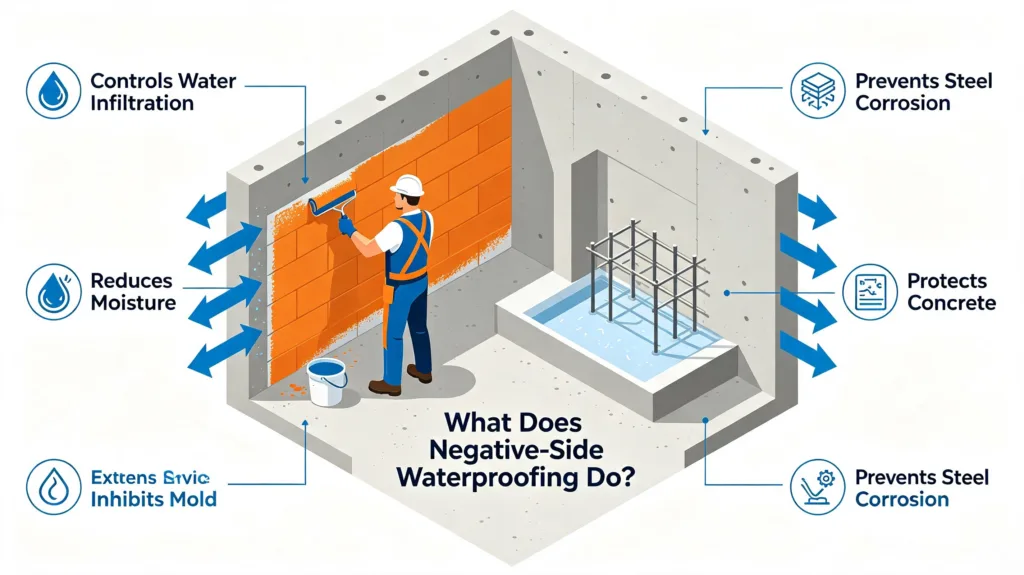
Negative-side waterproofing, applied from the interior, is the most reliable waterproofing solution when exterior waterproofing cannot be implemented. It is suitable for various waterproofing scenarios, especially damp basements, retaining walls, and elevator pits. Its core functions are as follows:
- Effectively controls water infiltration and seepage;
- Mitigates recurring moisture issues in basements and other below-grade spaces;
- Slows down the deterioration of concrete structures caused by long-term water exposure;
- Reduces the corrosion risk of steel reinforcement inside concrete;
- Inhibits the growth of mold, mildew, and the accumulation of unpleasant odors;
- Helps maintain indoor comfort and extends the overall service life of buildings.
Negative-side waterproofing serves as a viable alternative protective method, particularly for structures where exterior excavation is either impractical or prohibitively costly. The key to ensuring its waterproofing performance lies in the quality of the selected waterproofing materials.
Key FortisMate Products for Negative-Side Waterproofing
Crystalline Waterproofing Mortars and Associated Products
During negative-side waterproofing construction, crystalline waterproof mortars penetrate the pores of concrete and form crystalline structures within the substrate, blocking water migration through capillary voids in concrete. FortisMate offers high-performance crystalline waterproofing solutions tailored for this application. Our Fortismate LR-CCCW Cementitious Capillary Crystalline Waterproof Materials penetrate deep into concrete to form crystals, delivering permanent self-repair performance and perfectly suiting negative-side waterproofing projects.
Cement-Based Waterproofing Mortars
Crafted with specialized formulas to withstand negative water pressure, these mortars are extensively used for basement and retaining wall waterproofing construction. FortisMate’s cement-based waterproofing mortars ensure reliable adhesion and long-lasting waterproofing effects in below-grade environments.
Rapid Plugging Mortars
Designed to halt running water leaks swiftly, these materials deliver outstanding results for heavy localized water inflow. FortisMate’s rapid plugging mortars achieve fast initial set, enabling quick control of active water leaks to facilitate subsequent waterproofing construction.
Injection Waterproofing Systems
Polyurethane and acrylic injection materials are effective for blocking water seepage originating from structural cracks and construction joints. FortisMate’s injection systems provide targeted solutions for repairing leakage pathways in concrete structures.
Where Is Negative-Side Waterproofing Applied?
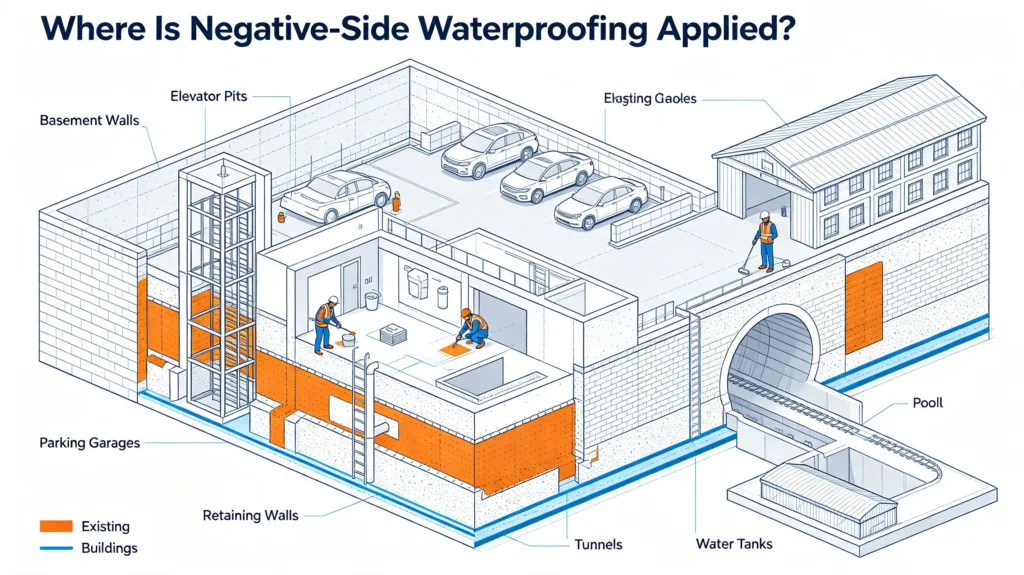
Negative-side waterproofing technology is adopted for locations where the water-facing exterior surface is hard or impossible to access for construction. Its typical application scenarios include:
- Basement walls
- Concrete foundation retaining walls
- Elevator pits
- Underground parking lots
- Underground shelters
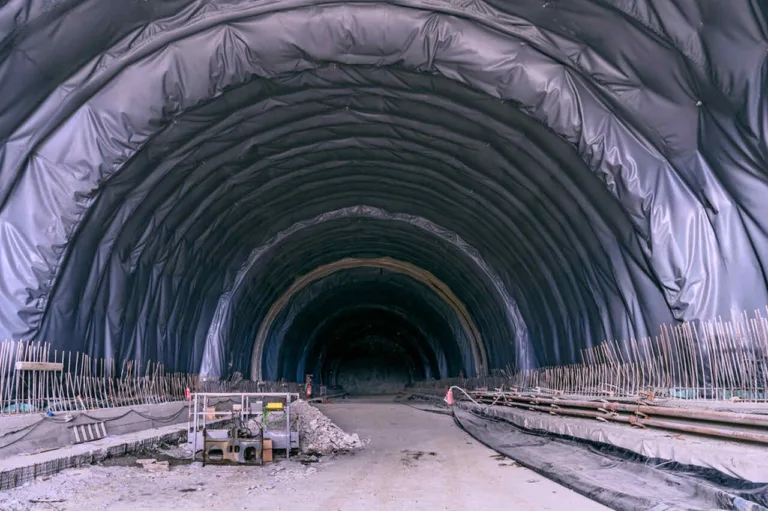
- Tunnels
- Water storage tanks
- Retaining walls
- Aged and existing buildings
It serves as a reliable, targeted solution, particularly for sites where external excavation is unfeasible due to adjacent surrounding buildings.
How Is Negative-Side Waterproofing Executed?
Material selection, surface preparation, and careful application are equally vital for the success of negative-side waterproofing. The procedure varies based on structural conditions and water pressure, with six standard steps outlined below:
1. Surface Preparation
Remove loose debris, grease, dust, and paint residues from the concrete surface to ensure proper bonding. For aged buildings, grinding or high-pressure washing is adopted to expose the porous concrete substrate.
2. Crack & Damage Repair
Identify all leakage pathways, including voids, cold joints, tie holes, and cracks. Repair these areas with high-adhesion, non-shrink repair mortar from Fortismate’s comprehensive Repair & Reinforcement Systems range. Polyurethane or epoxy injection is applied for dynamic cracks to fully seal water ingress pathways.
3. Stop Running Water Leaks
Seal active pressurized water inflow first with fast-setting plugging mortar. Polyurethane or acrylate injection is ideal for narrow leaking cracks, guaranteeing stable performance of subsequent waterproof layers.
4. Strengthen Corners & Joints
Wall-floor junctions and corners are vulnerable to water infiltration. Construct fillets with a radius of 3–5 cm using mortar or fillet tape to form a continuous, unbroken waterproof layer.
5. Apply Waterproof Coating
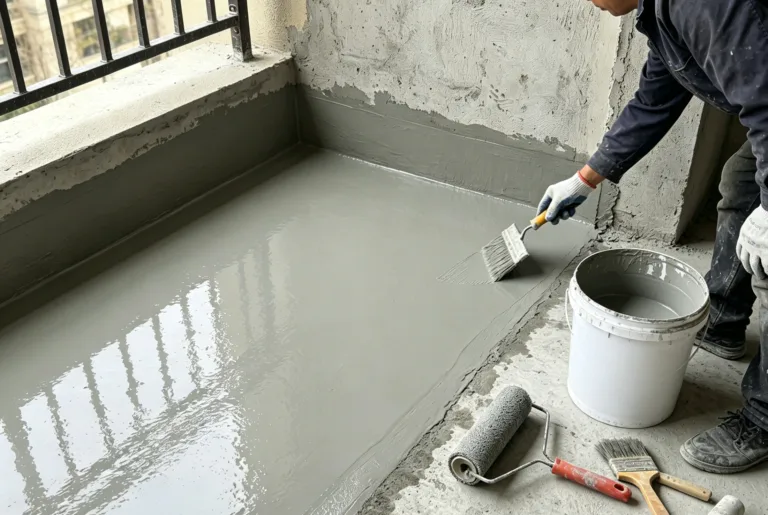
Apply your chosen Fortismate negative-side waterproof materials in two or more coats with a brush, trowel, or sprayer, strictly in accordance with the manufacturer’s guidelines. Always abide by the waiting intervals between coats. FortisMate’s recommended products for this step include:
- Fortismate LR-CCCW Cementitious Capillary Crystalline Waterproof Materials (penetrates deep into concrete to form crystals and deliver permanent self-repair performance);
- Fortismate WBC-JS Polymer Cementitious Waterproof System (cement-acrylic based, high-performance capillary-active material, applicable for both negative and positive side waterproofing);
- Fortismate WBC-A Acrylic Water-based Waterproof Coatings;
- Fortismate SBC Series Solvent-based Waterproof Coatings (including SBC-PU Polyurethane & SBC-NCRB Non-curable Rubber Bitumen).
6. Curing & Final Inspection
Carry out curing strictly in line with the product’s technical data sheet. Avoid rapid drying and drastic temperature fluctuations. After curing completion, inspect the surface and apply supplementary coats to defective areas. For structures under high water pressure, a water test may be conducted to verify waterproofing performance.
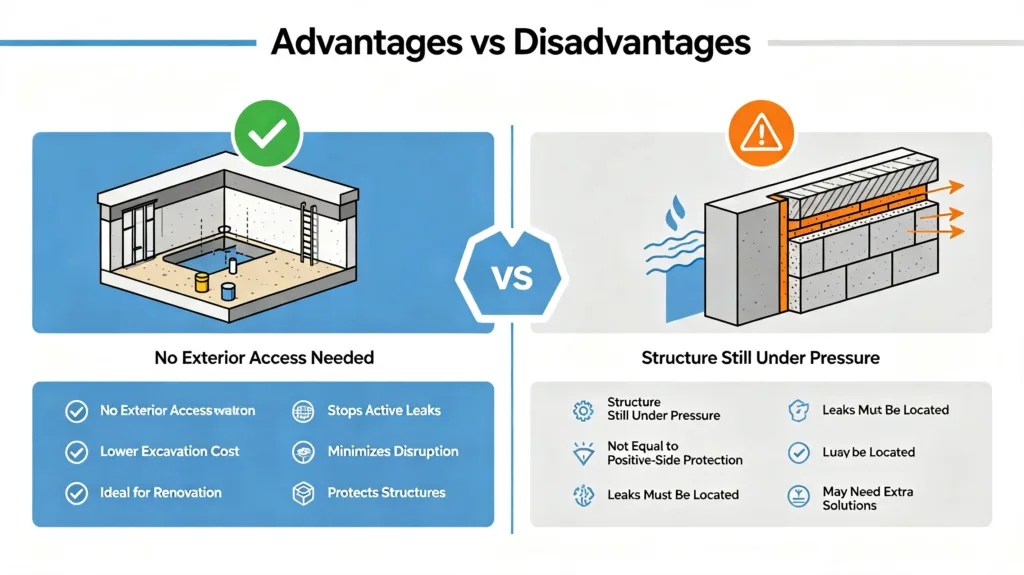
Advantages of Negative-Side Waterproofing
Though positive-side waterproofing is the primary choice for new construction, negative-side waterproofing serves as a practical, reliable alternative ideal for below-grade spaces where exterior access is unavailable. Its key merits are summarized below:
- No need for exterior access: Works entirely from the interior of basements, foundation walls, and underground structures; no excavation is required to reach the outer facade.
- Cuts excavation & labor expenses: Avoids time-consuming, costly external digging, delivering higher cost efficiency for old buildings.
- Perfect renovation solution for existing buildings: Fixes leakage issues in occupied buildings without large-scale demolition, widely adopted for structural refurbishment and reinforcement projects.
- Stops active running water effectively: Combined with plugging mortar, injection grout, and crystalline waterproof materials, it successfully seals pressurized water inflow and improves the usability of underground spaces.
- Construction with no halt to building operation: Occupied residential, commercial, and industrial premises can continue functioning normally during waterproofing work, with no full evacuation needed.
- Long-term protection for reinforced concrete structures: Blocks water infiltration to prevent steel bar corrosion, concrete cracking, and strength degradation, extending the service life of structural components.
- Suppresses dampness, mold, and unpleasant odors: Alleviates persistent humidity in underground areas, optimizes indoor air quality, and eliminates mold and musty smells.
- Revitalizes idle underground spaces: Leaky basements, archives, parking lots, and utility rooms that were previously unusable can be restored for practical use, greatly lifting the overall functional value of the building.
Disadvantages of Negative-Side Waterproofing
Despite its practical merits, negative-side waterproofing comes with inherent drawbacks:
- It cannot fully block water from contacting the building structure; it merely stops moisture from seeping indoors.
- The concrete structure remains subject to persistent water pressure.
- Its overall protective performance is generally inferior to positive-side waterproofing.
- Precise identification of all leakage points is mandatory prior to construction.
- For areas bearing intense, sustained hydraulic pressure, supplementary waterproof treatments are often required.
For this reason, positive-side waterproofing is always the first choice whenever exterior construction is feasible. Nonetheless, negative-side waterproofing remains a prevalent and effective remedy for leakage renovation when external access is unavailable.
For further knowledge about waterproofing technology and construction chemicals, or to browse our full range of waterproof materials, welcome to check our official blog and construction chemicals page.