welcome
-
linshizi@fortismate.com ; sales@fortismate.com



What is Polyurea?
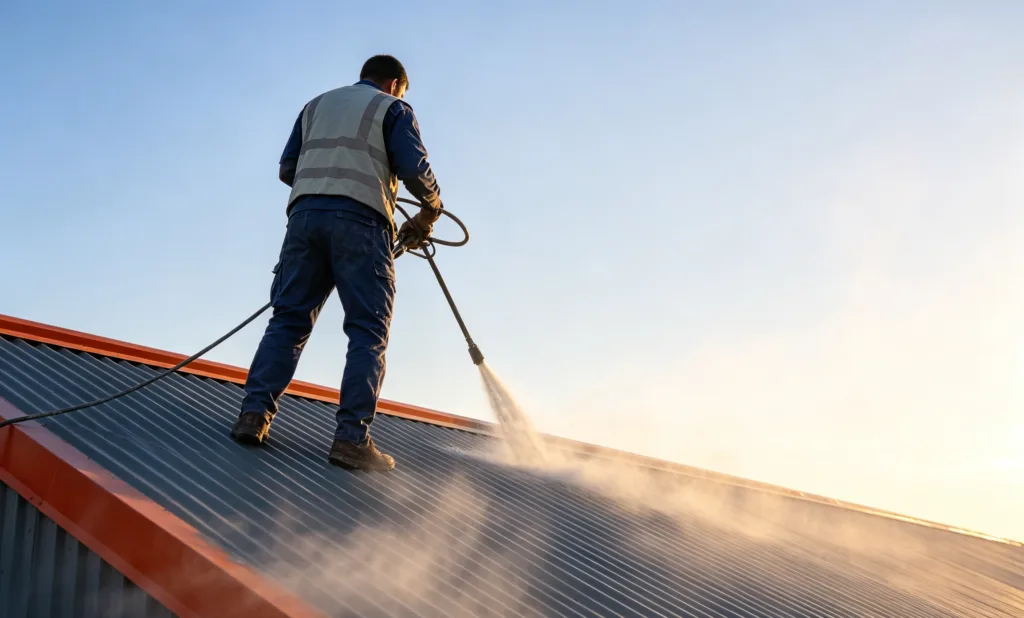
Polyurea is a high-density macromolecular polymer made from isocyanate and polyether resin. When these two raw materials are mixed and sprayed with professional equipment, rapid curing takes place, forming a flexible, robust protective coating known as polyurea coating.
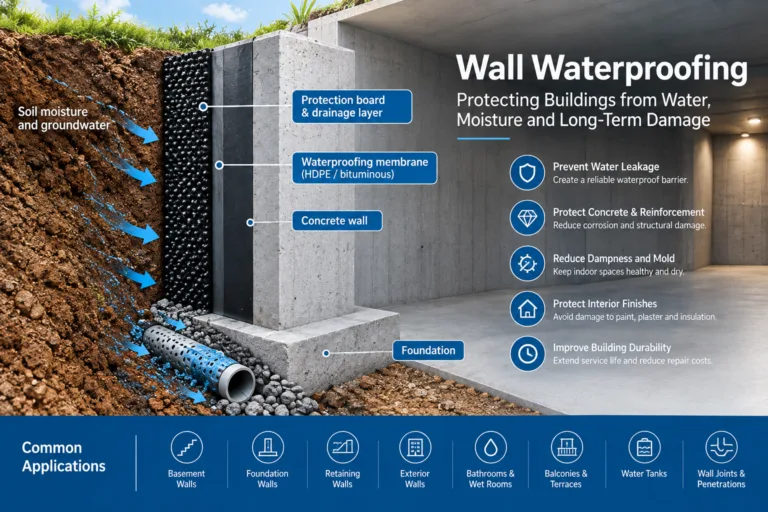
With its dense impermeable framework, polyurea is widely adopted for waterproof projects. It adheres firmly to concrete, metal, wood and other substrates, making it ideal for parking decks, terraces, rooftops, industrial floors and water tanks. Fast spray application and quick curing enable rapid commissioning, making polyurea a durable and cost-effective solution.
Properties of Polyurea
Polyurea’s special high-molecular structure creates a dense cross-linked polymer network, offering strong mechanical and chemical resistance. It protects substrates from impact, wear and long-term heavy loads.
Main properties:
- High elasticity to cope with concrete thermal expansion, contraction and microcracks, avoiding coating crack and delamination
- Seamless integral film blocks water penetration to achieve top-tier waterproofing effect;
- Good resistance against acids, oil, solvents and different industrial chemicals;
- Retains flexibility and strength under both high and low extreme temperatures;
- Excellent adhesion on concrete, metal, wood and diverse substrates;
- Crack-bridging ability to seal micro and major cracks to prevent water seepage;
- Adhesion strength reaches over 2 MPa on concrete and metal substrates.
As previously mentioned, polyurea can work as thermal insulation coating material. We will further elaborate on the core functions of polyurea coating below.
Where Can Polyurea Coating Be Applied?
Polyurea coating is a popular waterproofing material for surfaces subject to constant water exposure. It stands out for corrosion protection, crack resistance and rapid curing speed. Capable of firmly bonding to many different substrates, its key benefits are shown below:
Main Functions:
- Superior chemical resistance protects concrete and metal against rust, corrosion and chemical attack.
- High elasticity stops new cracks from emerging and bridges cracks already present on the base.
- Minimizes abrasion by defending surfaces against impact, friction and heavy load conditions.
- Fast curing shortens waiting time, allowing facilities to be put back into use rapidly.
- Great adhesion to diverse surfaces ensures the coating remains intact for a long time.
- Tolerates outdoor weathering including UV radiation, rain and temperature cycling.
- Produces smooth, sanitary surfaces that are easy to clean and lower maintenance requirements.
Many clients also enquire about how long polyurea coating can last. Thanks to its firm attachment to substrates, it delivers long-term reliable performance. So what key factors determine the service life of polyurea coating?
Where Is Polyurea Applied?
Polyurea is a flexible coating solution deployed in a wide range of sectors for floor construction and surface protection. It works excellently wherever waterproofing, corrosion resistance and mechanical strength are required, most prominently as polyurea flooring and roof protective coating.
Thanks to spray-on installation technology, polyurea closely fits all substrate shapes and forms a joint-free monolithic protective layer.
Major application sectors:
- Roofs and Terraces: Applied for roof waterproofing. Its seamless structure eliminates leakage risks and offers long-lasting UV-resistant protection. It provides insulation and surface protection for terrace areas.
- Industrial Surfaces: Used as factory flooring. Resistance to heavy loads, chemicals and continuous traffic extends floor service life and cuts maintenance costs.
- Pools and Water Tanks: An optimal choice for permanently wet environments, delivering stable waterproofing and hygienic surface conditions.
- Roads and Parking Lots: High abrasion and impact tolerance makes it ideal for vehicle-bearing areas, combining waterproofing and surface protection.
- Pipelines: Acts as anti-corrosion coating for pipes and metal substrates to prevent rust and environmental degradation.
- Vehicle Coatings: Coats truck beds and cargo compartments to resist impacts and scuffs, boosting durability.
How Is Polyurea Applied?
Polyurea coating relies on temperature-controlled high-pressure spraying equipment to combine isocyanate and resin components during application.
Standard construction steps:
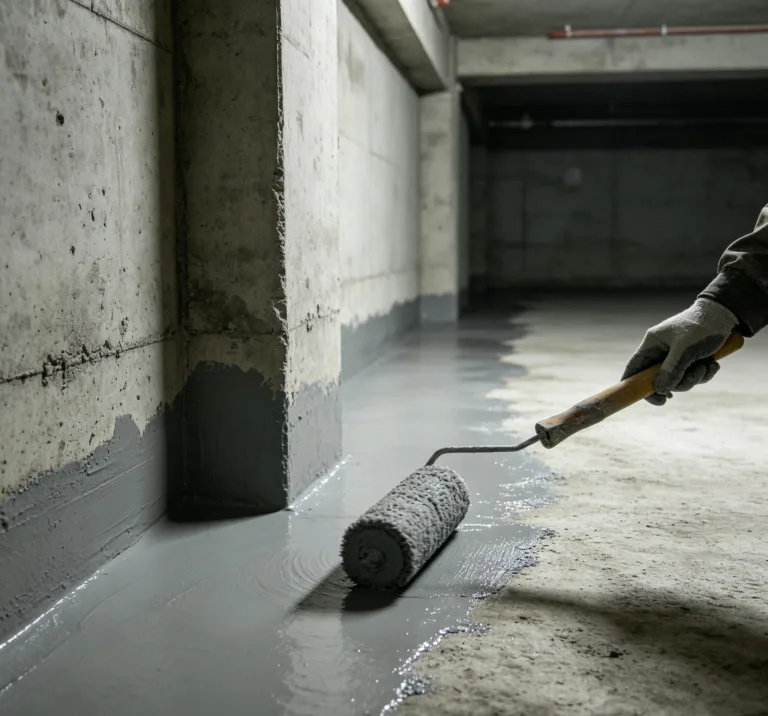
- Fully prepare the base surface: clean dirt, oil, dust and loose debris. Mechanical sanding may be performed when necessary.
- Fill cracks and hollows with proper repair materials.
- Obtain a smooth, firm substrate.
- Apply substrate-matched primer to improve adhesion.
- Uniformly spray polyurea mixture to form a seamless protective film.
- Set coating thickness to meet project requirements.
- Utilize its ultra-fast curing feature; the material gels rapidly and can be put into service quickly.
- Inspect finished surfaces and add extra coating layers as needed.
- Apply topcoats to enhance UV resistance, chemical resistance or other protection according to project specifications.
For long-term seamless waterproofing projects, FortisMate LR-WPU and LR-OPU is an ideal option.
Can Polyurea Be Applied to Different Surfaces?
Yes. Polyurea works well on concrete, metal, wood and plastic. As long as suitable primer is adopted and surfaces are properly treated, it achieves reliable adhesion on diverse substrates.
How Is Polyurea Produced?
Special high-pressure equipment mixes isocyanate and resin raw materials to form polyurea. Amine-terminated polymers in the resin quickly react with isocyanate to form polymer chains and create cross-linked structures. This rapid reaction enables instant gelation, and the material soon acquires strong mechanical properties. Polymer additives help improve flexibility and longevity.
Will Polyurea Develop Cracks?
Polyurea rarely cracks because of its high elasticity and capability to follow surface movement. Nevertheless, poor construction practice or excessive structural shifting may lead to cracks.
For optimal performance, polyurea coating construction must comply with official product instructions. Adequate surface preparation and correct application skills are vital to obtain long-lasting performance. Check our Website for more information about construction materials.