welcome
-
linshizi@fortismate.com ; sales@fortismate.com


Concrete Waterproofing: Methods, Applications, and How to Choose the Right Solution
Introduction
Concrete is one of the most widely used materials in modern construction. However, despite its strength and durability, concrete is not completely waterproof. Water can penetrate through pores, capillaries, construction joints, and cracks, potentially leading to leakage, dampness, corrosion of reinforcing steel, and long-term deterioration.
Effective concrete waterproofing is essential for protecting buildings, extending service life, and reducing maintenance costs. From residential basements and commercial buildings to tunnels and large infrastructure projects, selecting the right waterproofing system is a critical part of construction planning.
As a manufacturer and supplier of waterproofing materials, FortisMate provides a range of solutions designed for different substrates, site conditions, and project requirements. In this guide, we explore common concrete waterproofing methods, their applications, and the factors to consider when selecting a suitable system.
1. What Is Concrete Waterproofing?
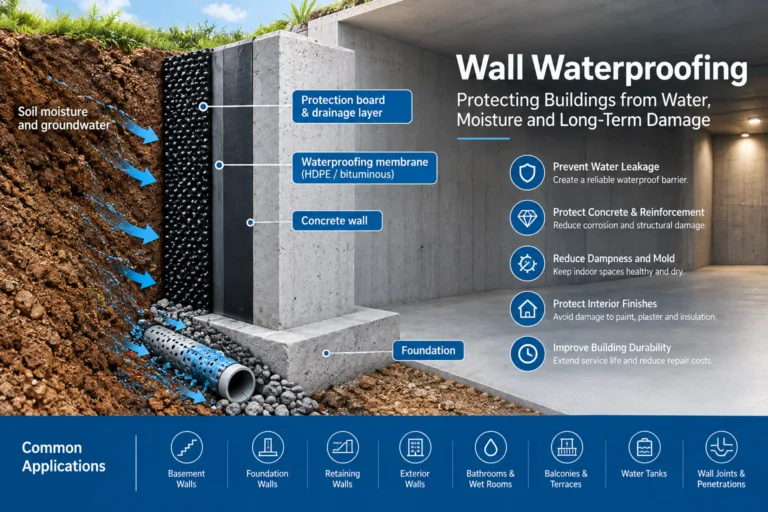
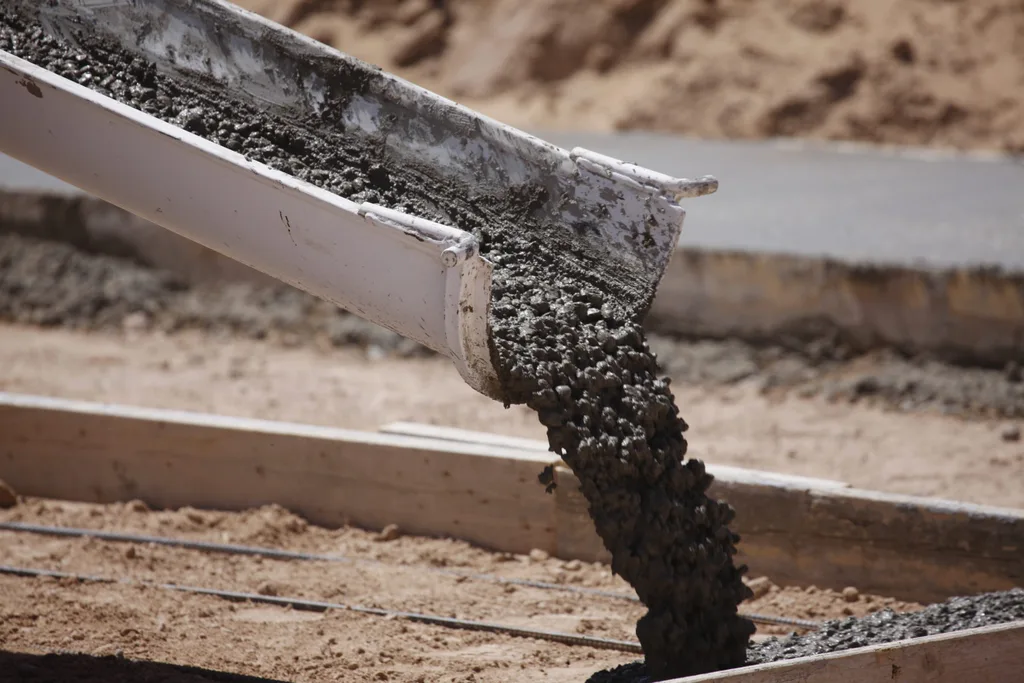
Concrete waterproofing refers to the use of materials and construction methods to prevent water from penetrating concrete structures.
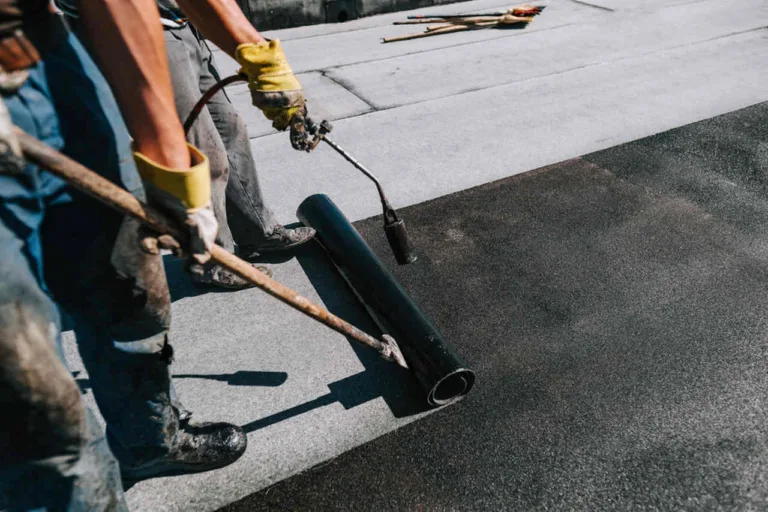
Depending on the project, waterproofing may involve applying a protective coating, installing a waterproofing membrane, treating joints and cracks, or incorporating suitable waterproofing admixtures into the concrete mix.
The primary objectives are to:
- Prevent water leakage and moisture penetration.
- Protect concrete and embedded reinforcement from water-related deterioration.
- Improve the durability of foundations and underground structures.
- Reduce the risk of dampness, mold growth, and damage to interior finishes.
- Minimize long-term maintenance and repair requirements.
The appropriate waterproofing method depends on the structure’s location, exposure to water, substrate condition, groundwater pressure, and construction sequence.
2. Common Concrete Waterproofing Method–Cementitious Waterproofing Coatings
Different waterproofing technologies serve different purposes. Understanding their characteristics helps contractors, distributors, and project owners select a suitable solution.
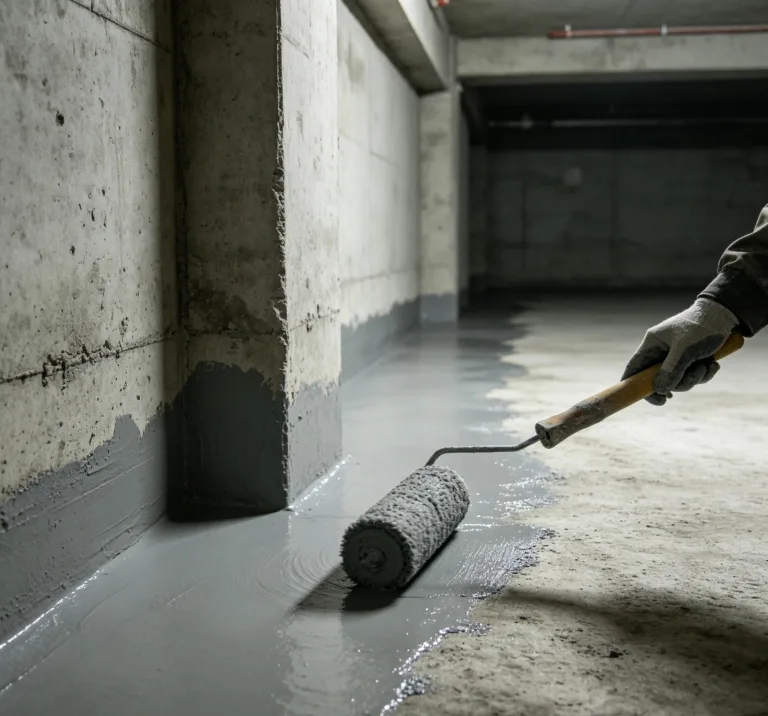
Cementitious waterproofing coatings are commonly used on concrete and masonry surfaces. These materials are generally supplied as one-component or two-component systems and are applied by brush, roller, or other methods specified by the manufacturer.
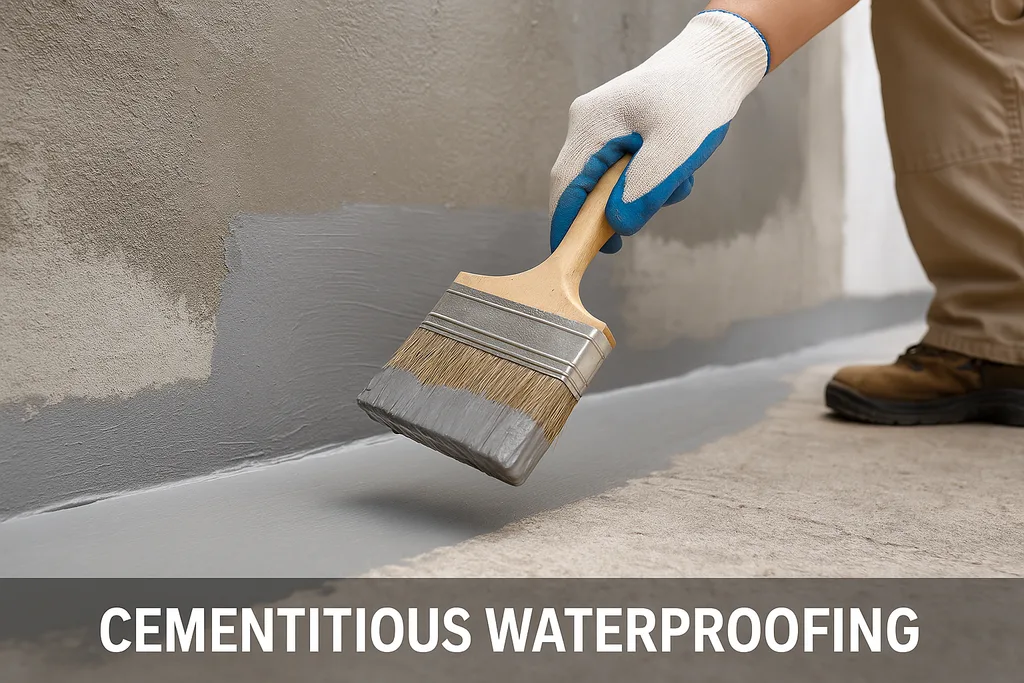
Polymer-modified cementitious coatings combine cement-based components with polymers to improve adhesion and waterproofing performance.
Typical applications include:
- Basements and foundation walls
- Bathrooms and other wet areas
- Concrete walls and floors
- Water-retaining structures, where the selected product is suitable
FortisMate offers polymer-modified cementitious waterproofing solutions, including JS-type waterproof coatings, for applications that require a compatible coating system.
Before application, the substrate should be properly prepared, and the coating should be applied at the specified thickness and curing conditions. Product selection should take into account water pressure, substrate movement, and whether the surface will remain exposed or receive a protective finish.
3. What About Crystalline Waterproofing?
Crystalline waterproofing is another technology used in concrete construction. Depending on the product, crystalline materials may be incorporated into the concrete mix or applied to a prepared concrete surface.
The active components react with moisture and constituents in the cementitious material to form insoluble crystalline products within pores and capillary pathways. This process can reduce water penetration when the product is compatible with the concrete and applied according to its technical instructions.
Crystalline waterproofing may be considered for applications such as:
- Foundations and basements
- Underground concrete structures
- Water-retaining structures
- Other suitable cementitious substrates
However, crystalline waterproofing is not a universal replacement for every membrane or coating system. Performance depends on the product formulation, concrete conditions, crack characteristics, water pressure, and construction details.
For projects requiring a specific crystalline waterproofing admixture or coating, the product’s technical data sheet should be reviewed carefully to confirm its intended use and performance.
Choosing the right waterproofing technology is more important than choosing a method simply because it is popular. In many projects, a coordinated waterproofing system incorporating membranes, coatings, joint treatments, and localized injection repairs may be more appropriate than relying on a single material.
4. Where Is Concrete Waterproofing Needed?
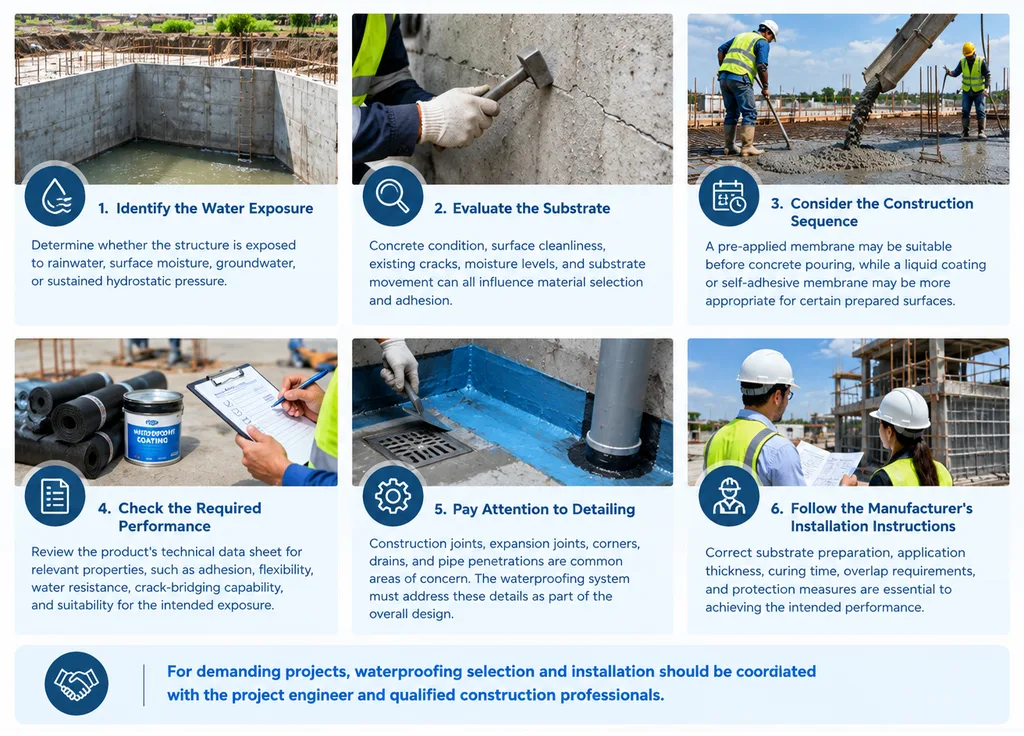
5. How to Choose the Right Waterproofing System
6. Why Choose FortisMate Waterproofing Materials?
FortisMate is a waterproofing materials manufacturer and supplier based in Shenzhen, China, serving distributors, contractors, and construction project clients in international markets.
With more than 15 years of experience in waterproofing and construction materials, FortisMate provides a broad range of solutions for different waterproofing requirements.
Our product portfolio includes:
- Bituminous waterproofing membranes, including APP and SBS types
- Self-adhesive waterproofing membranes
- Pre-applied HDPE waterproofing membranes
- PVC and TPO waterproofing membranes
- Polymer-modified cementitious waterproof coatings
- Polyurethane and acrylic liquid waterproofing products
- Polyurethane injection grouting materials
Product suitability depends on the specific formulation and intended application. Our team can help customers identify appropriate products based on project requirements, technical specifications, and local market needs.
Manufacturer Supply and OEM/ODM Support
FortisMate works with international distributors, importers, contractors, and private-label customers.
For qualified business partners, we can discuss OEM/ODM cooperation, product customization, and packaging options according to project and market requirements.
Our approach focuses on practical product selection, technical documentation, and long-term cooperation to support customers in developing their waterproofing businesses.
Conclusion
Concrete waterproofing is an essential part of protecting buildings and infrastructure from water-related damage. From cementitious coatings and liquid-applied membranes to self-adhesive membranes, pre-applied HDPE systems, and polyurethane injection grouts, each technology serves different purposes.
The most suitable solution depends on the structure, water exposure, substrate conditions, construction sequence, and required performance.
By selecting compatible materials and following proper installation procedures, construction professionals can improve waterproofing reliability, protect concrete structures, and reduce the risk of costly leakage repairs.
Looking for a waterproofing materials supplier for your next project?
Explore FortisMate’s waterproofing solutions or contact our team to discuss your product requirements, technical specifications, and OEM/ODM opportunities.
FortisMate — Waterproofing Materials from China.