welcome
-
linshizi@fortismate.com ; sales@fortismate.com



Roof Waterproofing: Types, Materials and Application Guide
Roofs are among the largest parts of a building exposed directly to rain, snow, sunlight, and changing weather conditions. Effective roof waterproofing acts as a protective barrier, preventing water from penetrating the building structure and helping maintain the building’s durability, performance, and service life.
Roof waterproofing is the process of protecting a roof against water penetration by applying suitable waterproofing membranes, coatings, and complementary materials. A properly designed roof waterproofing system helps prevent leaks and reduces the risk of moisture-related problems such as mold, fungus growth, concrete deterioration, and damage to interior finishes.
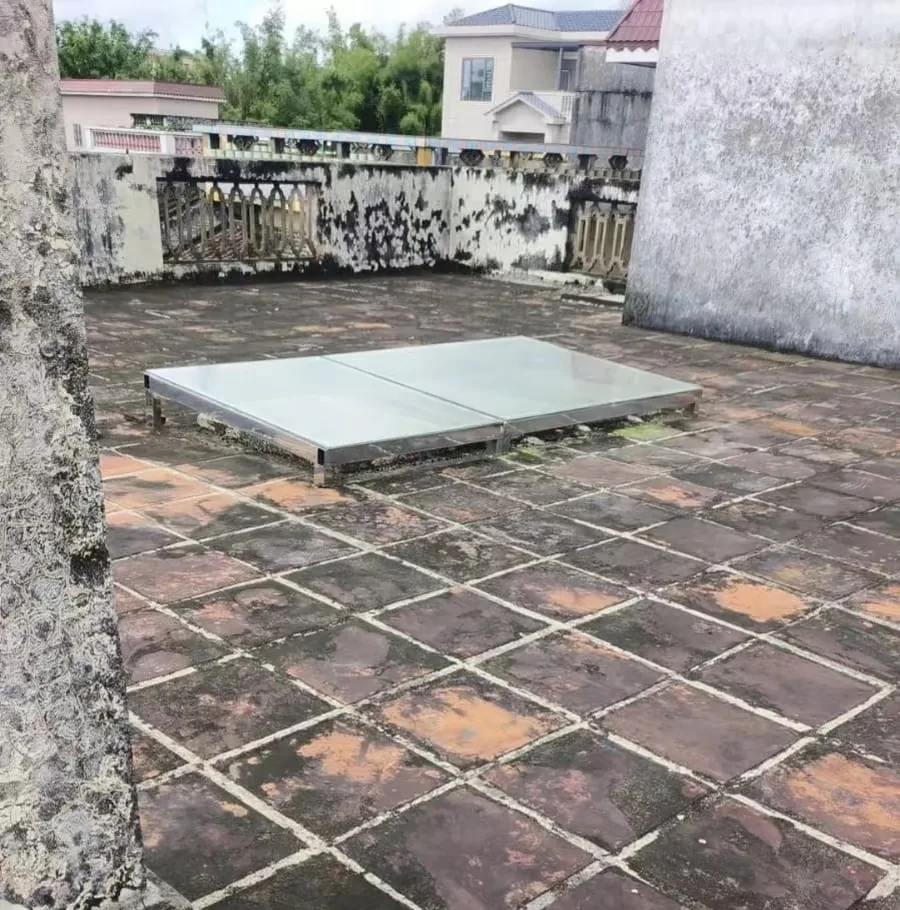
However, successful roof waterproofing is not simply a matter of applying a waterproof material to the roof surface. The waterproofing system should be selected according to the roof structure, substrate condition, local climate, UV exposure, drainage conditions, and whether the waterproofing layer will remain exposed or be covered by another finish.
As a specialist in construction chemicals and waterproofing materials, FortisMate has prepared this guide to explain what roof waterproofing membranes and coatings are, how roof waterproofing is carried out, and what types of waterproofing materials can be considered for different roof applications.
You can also read our article “Do You Exactly Know Everything About Waterproofing in Buildings?” to learn more about waterproofing principles and how waterproofing systems work.
How Is Roof Waterproofing Done?
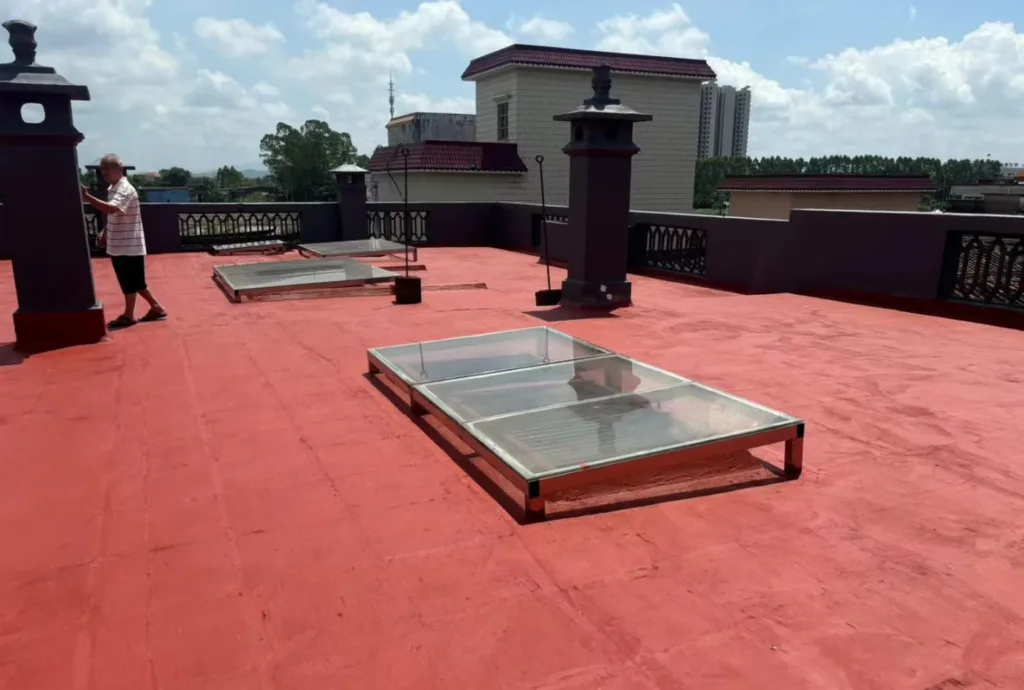
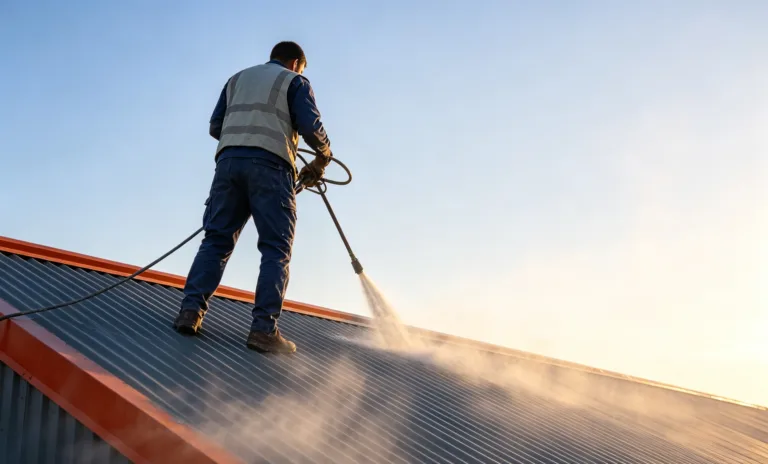
Worker applying waterproof coating on a rooftop
When roof waterproofing is not properly designed or installed, rainwater and snowmelt can penetrate through cracks, joints, weak points, or damaged areas of the roof. Over time, water infiltration can cause deterioration of the concrete substrate, damage insulation and interior finishes, and create conditions favorable to mold and fungus growth.
For this reason, roof waterproofing should be carried out by qualified professionals using materials appropriate for the specific roof structure and exposure conditions.
A typical roof waterproofing process may include the following steps:
1. Inspect and Prepare the Roof Substrate
Before waterproofing begins, the roof surface should be inspected carefully. Cracks, holes, loose concrete, uneven areas, contaminated surfaces, and other defects should be identified and properly treated.
The substrate should generally be clean, sound, and sufficiently prepared for the selected waterproofing system. Depending on the waterproofing material, primer application or moisture control may also be required.
2. Treat Cracks, Joints and Critical Details
Roof edges, corners, construction joints, expansion joints, pipe penetrations, drains, and other transitions are common areas where water leakage may occur.
These details should be treated with suitable sealants, tapes, reinforcement materials, or other compatible waterproofing accessories before or during the main waterproofing application.
3. Apply the Waterproofing Membrane or Coating
Depending on the project requirements, the main waterproofing layer may consist of a sheet membrane or a liquid-applied waterproof coating.
Bituminous membranes, acrylic coatings, polyurethane coatings, and other waterproofing systems can be selected according to the roof design, exposure conditions, substrate, and required service performance.
For liquid-applied systems, the coating should be applied evenly at the specified thickness. Where reinforcement fabric is required, it should be properly embedded into the waterproofing layer according to the manufacturer’s application instructions.
4. Ensure Proper Roof Drainage
Waterproofing alone cannot compensate for poor roof drainage.
The roof should have appropriate slope and drainage systems to minimize prolonged standing water. Drains, outlets, and other drainage components should be properly designed and maintained so that rainwater can be discharged efficiently.
Standing water, or ponding water, can place additional stress on a waterproofing system and may contribute to premature deterioration.
5. Apply a Protective or Top Coat When Required
For exposed roofs, the waterproofing system may need additional protection against UV radiation, weathering, mechanical wear, and temperature changes.
Depending on the selected system, a suitable protective or top coat can help improve the long-term performance of the waterproofing layer.
Therefore, a reliable roof waterproofing system should be considered as a complete system rather than a single waterproofing product.
Which Materials Are Used for Roof Waterproofing?
Technician applying waterproofing material onto a roof substrate
Roofs are continuously exposed to changing environmental conditions. If they are not properly protected, water penetration can reduce the service life of building components and cause discomfort or damage to end users.
Selecting the right roof waterproofing materials is therefore an important part of roof design and renovation.
One of the most common questions from project owners, contractors, and construction professionals is:
Which waterproofing membrane or coating should be selected for a roof project?
There is no single waterproofing material suitable for every roof. The appropriate solution depends on factors such as:
- Roof structure and substrate
- New construction or renovation
- Exposed or non-exposed application
- Local rainfall and climate
- UV exposure
- Temperature changes and thermal movement
- Roof slope and drainage conditions
- Expected pedestrian or maintenance traffic
- Required service life
- Construction method and project budget
Common roof waterproofing solutions include bitumen-based waterproofing membranes, liquid-applied waterproof coatings, acrylic roof coatings, polyurethane coatings, and rubber bitumen coatings.
Auxiliary materials such as joint sealants, chamfer tapes, reinforcement fabrics, crack-treatment materials, and drainage components can also form an important part of a complete roof waterproofing system.
Roof tiles and tile underlayment can also contribute to water management in pitched roof systems.
Before selecting a waterproofing material, it is important to evaluate the local precipitation level, temperature range, UV exposure, and overall climate conditions. A material that performs well on a protected roof may not necessarily be suitable for a continuously exposed roof.
Waterproofing membranes and liquid-applied coatings are among the most widely used solutions for roof waterproofing. Each system has its own advantages and should be selected according to the actual application requirements.
Bitumen-Based Waterproofing Materials
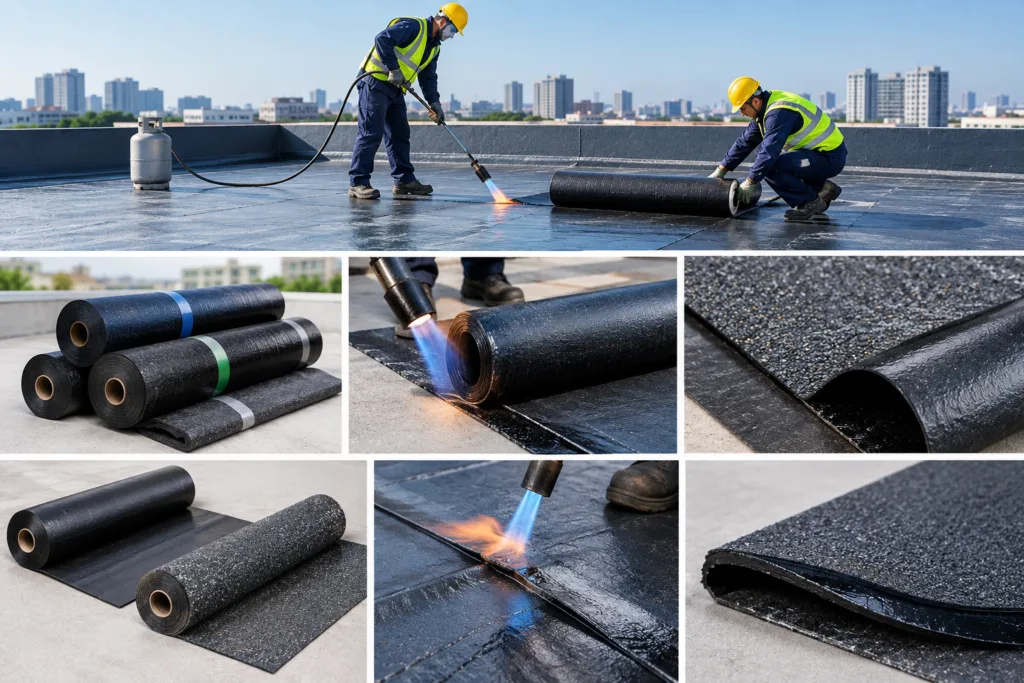
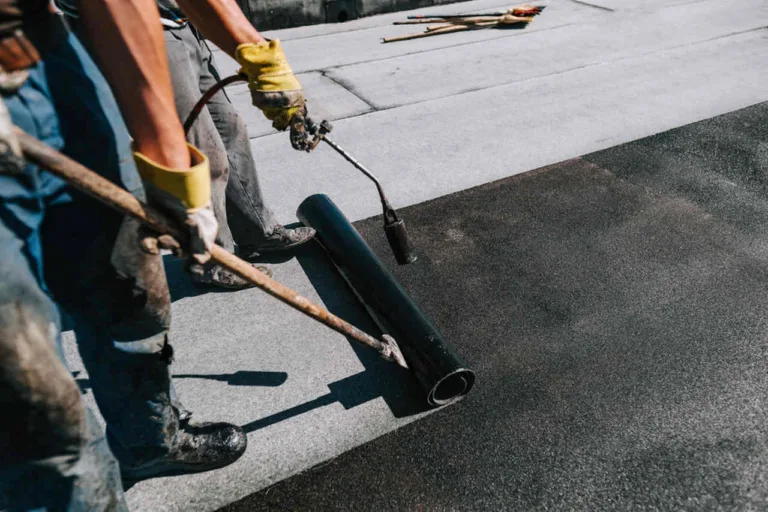
Field application of bitumen-based waterproofing material
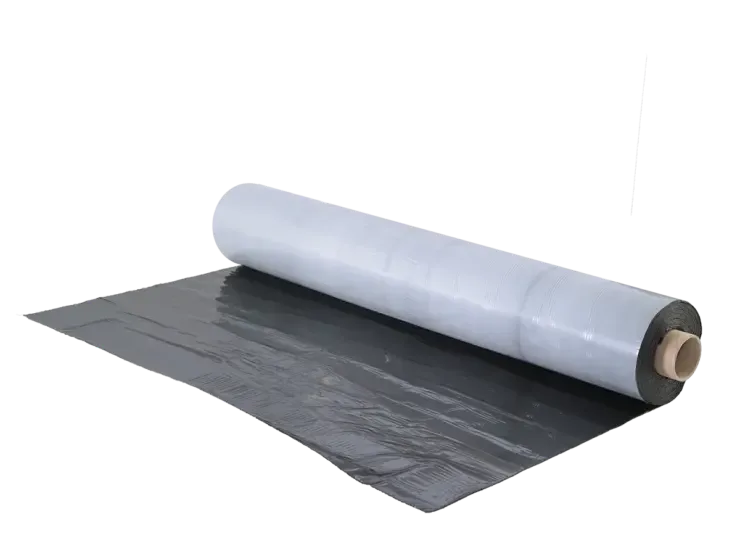
Bitumen-based waterproofing remains one of the widely used solutions for roof waterproofing. Within the FortisMate product portfolio, APP-modified and SBS-modified bituminous waterproofing membranes are available for different construction and renovation applications.
These materials are commonly supplied in roll form and can be used for new roof construction as well as roof renovation projects.
APP-Modified Bituminous Membranes
APP-modified bituminous membranes are formulated with atactic polypropylene-modified bitumen. They are commonly selected for applications where good heat resistance and weathering performance are required.
Depending on the product specification, APP membranes can be supplied in different thicknesses, reinforcement types, and surface finishes to meet project requirements.
SBS-Modified Bituminous Membranes
SBS-modified bituminous membranes use styrene-butadiene-styrene polymers to improve the flexibility and elastic properties of the bitumen.
They are commonly considered for applications where the waterproofing system needs to accommodate substrate movement and temperature-related changes.
Both APP and SBS membranes are available in different specifications for different roof applications.
Torch-applied bituminous membranes can form a continuous waterproofing layer when properly installed onto a suitably prepared substrate. Mineral-granule surface options can also be used where additional surface protection or a more suitable exterior appearance is required.
Because installation methods and requirements vary between products, the membrane should always be installed according to the manufacturer’s technical documentation.
Liquid Bitumen-Based Waterproofing Materials
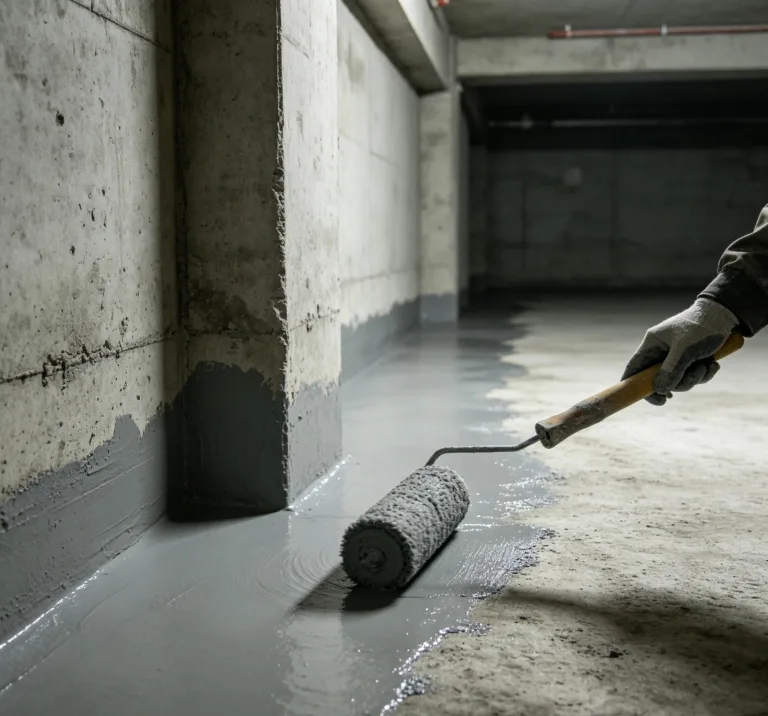
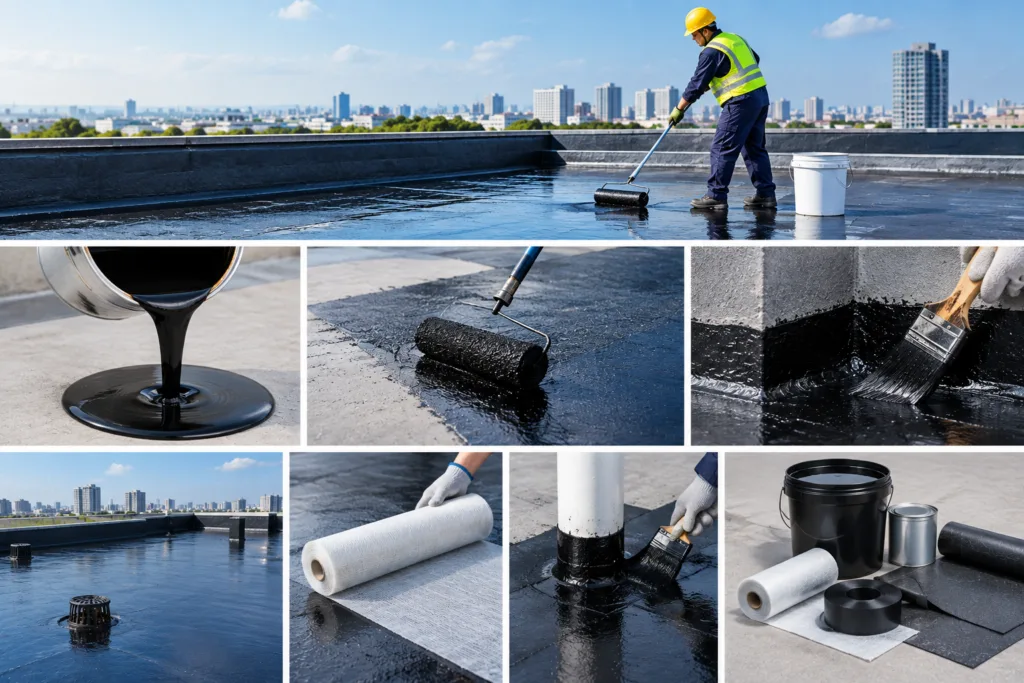
Liquid bitumen-based waterproof coating applied on site
Liquid bitumen-based waterproofing materials are another option for roof waterproofing applications.
Depending on the specific formulation, these products can be used as waterproof coatings or as part of a composite waterproofing system together with sheet membranes.
Bitumen has long been used in waterproofing because of its water-resistant properties and compatibility with a variety of construction applications. Liquid formulations can also be useful for treating complex areas where applying a sheet membrane may be more difficult.
However, the specific function of a liquid bitumen product depends on its formulation. Not every liquid bitumen coating should automatically be treated as a primer, so the product’s technical data and recommended application should always be checked before use.
For a complete roof waterproofing system, liquid bitumen-based products may be combined with membranes and complementary materials such as joint treatment products, reinforcement fabrics, sealants, and protective coatings.
The objective is not simply to create a waterproof surface, but to develop a system capable of managing water penetration, movement, joints, details, and environmental exposure.
Acrylic Roof Waterproofing Coatings
Application of acrylic waterproof coating on an exposed concrete roof
Acrylic waterproof coatings are commonly considered for exposed roof applications, particularly where UV resistance, ease of application, and roof renovation are important requirements.
Within the FortisMate product range, WBC-A UV-resistant acrylic waterproof coating is designed for applications such as exposed concrete roof renovation.
The coating can be combined with polyester reinforcement fabric where a reinforced waterproofing system is required. Depending on the application method, a one-fabric, four-coat system can be used to improve the continuity and reinforcement of the waterproofing layer.
Acrylic waterproof coatings are particularly useful when a seamless liquid-applied waterproofing layer is preferred. They can also be suitable for renovation projects where the existing roof surface requires a coating-based waterproofing solution.
Before application, however, the substrate should be properly assessed and prepared. Existing waterproofing layers, cracks, moisture conditions, and surface contamination can all affect the performance of the coating system.
For exposed roofs, UV and weather resistance should also be considered when selecting the final waterproofing system.
Polyurethane Roof Waterproofing Coatings
Technician applying polyurethane waterproof coating
Polyurethane waterproof coatings are another widely used liquid-applied waterproofing solution.
One of the advantages of a liquid polyurethane system is its ability to form a relatively seamless waterproofing layer, which can be useful for roofs containing irregular surfaces, penetrations, corners, and other complicated details.
FortisMate supplies SBC-PU single-component polyurethane waterproof coating, which can be considered for suitable roof applications, particularly where a non-exposed waterproofing layer and moisture-related conditions need to be taken into account.
As with other liquid-applied waterproofing systems, proper substrate preparation and application thickness are important for achieving the expected waterproofing performance.
Polyurethane systems should also be selected according to the specific exposure conditions of the roof. Where the waterproofing layer is directly exposed to sunlight, the UV resistance and suitability of the particular polyurethane formulation should be confirmed before specification.
Rubber Bitumen Waterproof Coatings
Rubber bitumen waterproof coating used in a composite roof waterproofing system
Rubber bitumen coatings combine bitumen with polymer or rubber-modifying components to provide a flexible waterproofing coating.
FortisMate’s SBC-NCRB non-curable rubber bitumen coating is designed for non-exposed roof applications and can be used as part of a composite waterproofing system with waterproofing membranes.
These types of systems can be considered where the waterproofing layer will be protected by another construction layer rather than continuously exposed to sunlight and weather.
As with any waterproofing system, compatibility between the coating, membrane, substrate, adhesive layer, and protective layer should be considered before installation.
How to Choose the Right Roof Waterproofing Material?
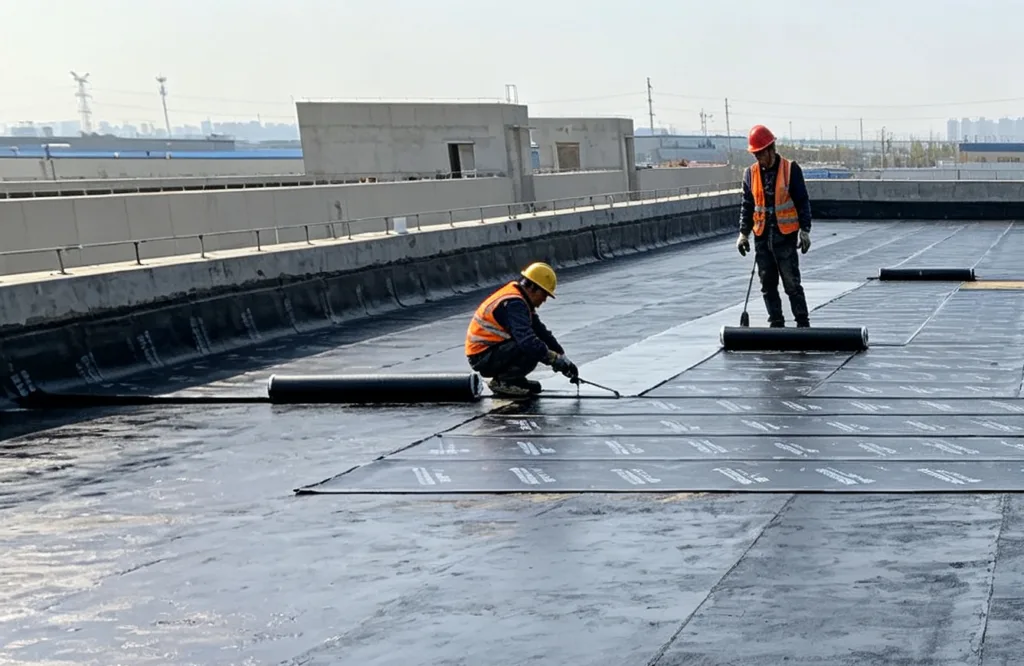
Choosing a roof waterproofing material should be based on the actual project conditions rather than simply selecting the most commonly used product.
For example:
For exposed concrete roofs and renovation projects:
UV-resistant acrylic waterproof coatings can be considered where a liquid-applied exposed waterproofing system is required.
For roof systems using sheet membranes:
APP- or SBS-modified bituminous membranes can be considered according to the required performance and installation conditions.
For complex roof surfaces:
Liquid-applied polyurethane or acrylic systems may be considered where a seamless coating can simplify waterproofing around complicated details.
For non-exposed composite systems:
Rubber bitumen coatings can be considered together with suitable waterproofing membranes.
The correct selection should always take into account the manufacturer’s technical data, application requirements, substrate conditions, and the overall roof system design.
Why Is Roof Drainage Important for Waterproofing?
Even a high-performance waterproofing membrane can be affected by poor drainage.
If rainwater remains on the roof for extended periods, the waterproofing system may be subjected to prolonged water exposure and additional mechanical and environmental stress.
For this reason, roof waterproofing should always be considered together with roof slope and drainage design.
Drainage outlets should be positioned appropriately, kept clear of debris, and regularly maintained. Areas around drains and penetrations should also receive careful waterproofing treatment because these are common locations for potential leakage.
A properly designed roof waterproofing system therefore combines waterproofing materials, detailing, drainage, substrate preparation, and correct installation.
Complete Roof Waterproofing Solutions from FortisMate
At FortisMate, we understand that roof waterproofing is not simply about choosing one waterproofing product.
Different roofs require different combinations of membranes, liquid coatings, reinforcement materials, joint treatments, and protective systems.
Our waterproofing product portfolio includes:
- APP-modified bituminous waterproofing membranes
- SBS-modified bituminous waterproofing membranes
- UV-resistant acrylic waterproof coatings
- Single-component polyurethane waterproof coatings
- Rubber bitumen waterproof coatings
- Complementary waterproofing and construction chemical products
These products can be used for different roof construction and renovation scenarios depending on the project requirements.
As a specialist supplier of waterproofing materials and construction chemicals, FortisMate supports customers not only with individual products but also with product selection and waterproofing system recommendations.
Conclusion
Roof waterproofing plays an important role in protecting buildings from rain, snow, moisture penetration, and weather-related deterioration.
A successful roof waterproofing system requires more than simply applying a waterproof material. Proper substrate preparation, suitable waterproofing membranes or coatings, correct treatment of joints and details, adequate roof drainage, and appropriate surface protection all contribute to long-term waterproofing performance.
Bituminous membranes, acrylic coatings, polyurethane coatings, and rubber bitumen coatings each have different characteristics and application conditions. The most suitable solution should therefore be selected according to the roof structure, climate, exposure conditions, substrate, drainage, and project requirements.
As a specialist in waterproofing materials and construction chemicals, FortisMate provides a range of waterproofing solutions for roof construction and renovation projects.
If you are developing a new roof project, renovating an existing roof, or looking for alternative waterproofing materials, our technical team can help you evaluate suitable products and waterproofing systems according to your application requirements.
You can also explore our other articles, including “What Is Wall Waterproofing and How Is It Done?”, and visit the FortisMate blog for more information about waterproofing materials, construction chemicals, and building protection solutions.